August 22, 2026

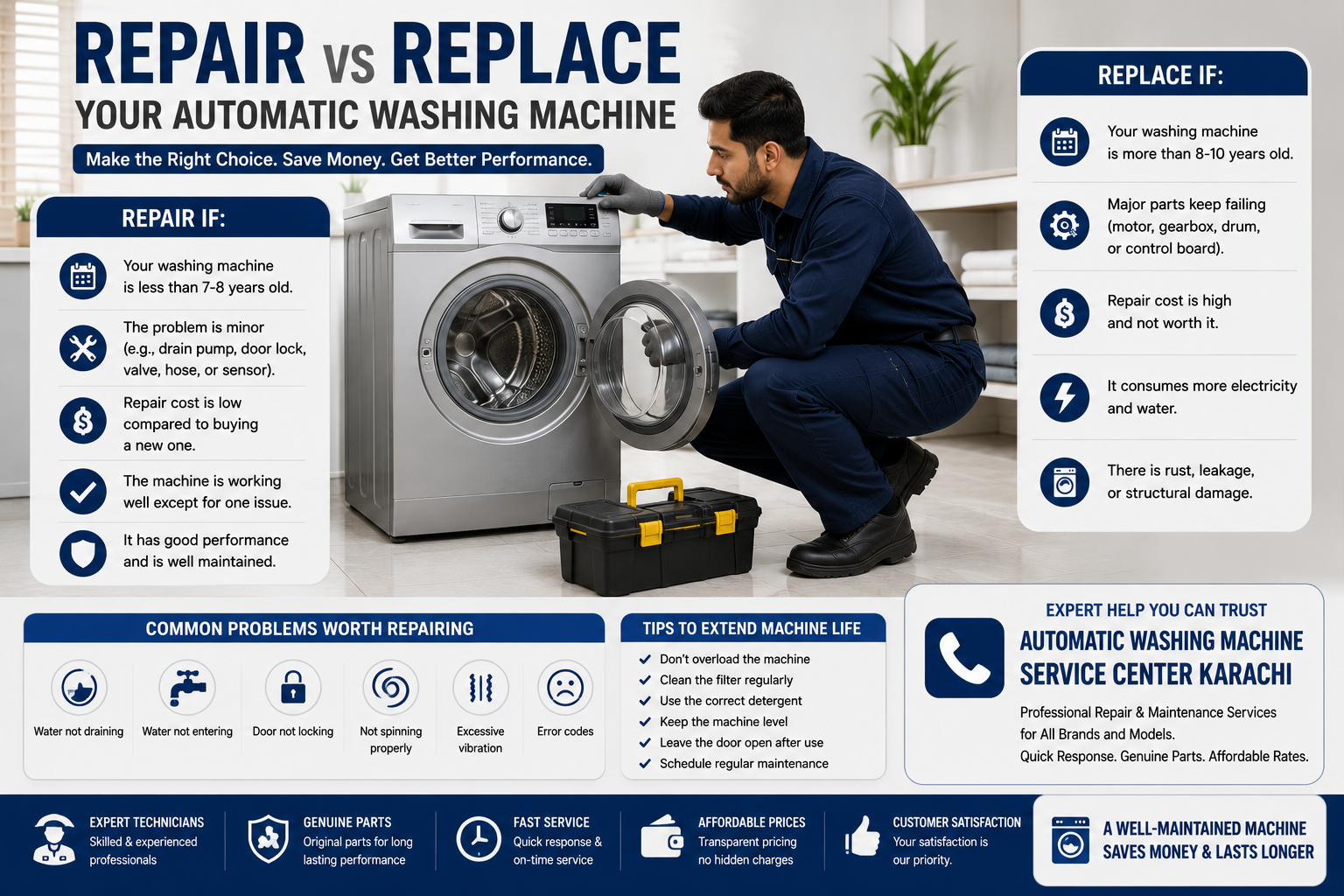
An automatic washing machine is a major part of everyday household life. When it starts making unusual noises, leaking water, stopping during cycles, or...


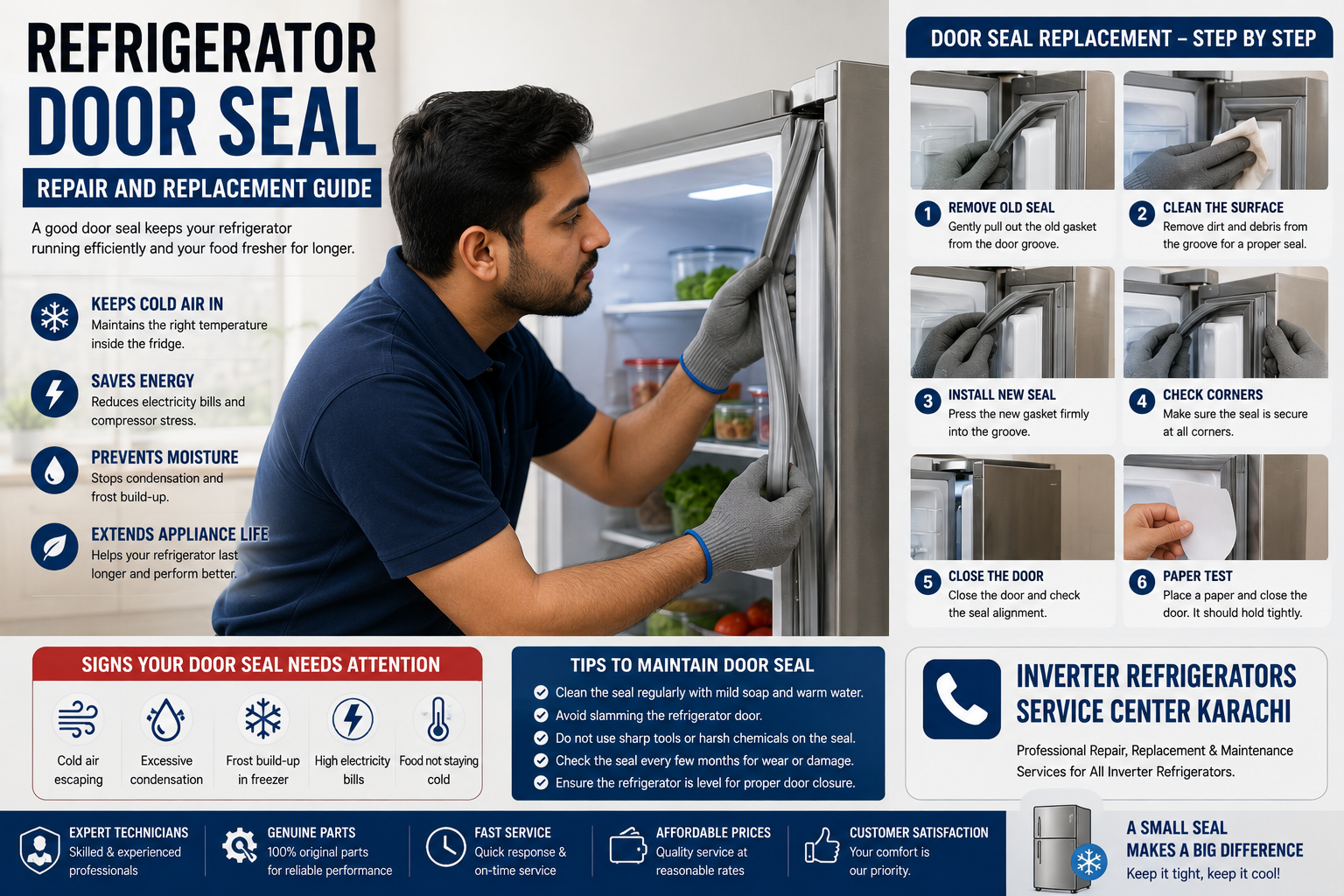
A refrigerator door seal, also called a gasket, plays an important role in keeping cold air inside the appliance. When the seal becomes loose, cracked, hardened, or damaged, warm air can enter the refrigerator. This makes the compressor work harder, increases electricity consumption, and may affect food freshness.
The good news is that many door seal problems can be identified early. In this guide, we’ll explain how to check a refrigerator door gasket, when it can be repaired, when replacement is necessary, and when professional help from an Inverter Refrigerators Service Center Karachi is recommended.
The refrigerator door seal is the flexible rubber strip fitted around the edge of the refrigerator door. It creates an airtight connection between the door and cabinet.
A properly working gasket helps:
Even a small gap in the gasket can affect refrigerator performance.
If you can feel cool air escaping around the door, the gasket may not be sealing correctly.
This can cause the refrigerator to run for longer periods as it tries to maintain the set temperature.
A damaged door seal allows warm air to enter continuously. As a result, the refrigerator may struggle to maintain the correct temperature.
Before assuming there is a compressor problem, inspect the door gasket carefully.
Moisture around the refrigerator door or inside the cabinet can be a warning sign of a poor seal.
Warm, humid air entering through gaps can create condensation and increase the workload on the cooling system.
If warm air enters the freezer through a damaged gasket, moisture can freeze and create excessive frost.
Heavy frost may restrict airflow and reduce cooling efficiency.
A refrigerator with a poor door seal may need to run much longer than normal.
If the compressor rarely switches off, check the gasket along with other possible causes such as dirty condenser coils or incorrect temperature settings.
You can perform a simple test at home.
If the paper is held firmly, the seal is likely making good contact. If it slides out very easily in several areas, the gasket may be loose or damaged.
Repeat the test around different sections of the door.
Grease, dust, and food particles can accumulate on the gasket and prevent it from making proper contact.
Repeated use can cause the rubber to crack, tear, or become brittle.
A gasket can become warped if the refrigerator door has been forced, stored improperly, or exposed to excessive heat.
If the refrigerator door is not properly aligned, even a good gasket may not seal correctly.
Door gaskets naturally deteriorate over time. Older refrigerators may require gasket replacement even when there is no obvious tear.
Sometimes the gasket doesn’t need replacement—it simply needs cleaning.
For routine gasket cleaning, you can usually clean the seal without removing it. Follow your appliance manufacturer’s safety instructions.
Use warm water with a small amount of mild dish soap.
Use a soft cloth or sponge to remove dirt from the rubber folds.
Avoid harsh chemicals or abrasive cleaning materials that could damage the gasket.
Wipe away moisture with a clean, dry cloth.
Look for cracks, tears, gaps, or sections that have become permanently deformed.
Minor gasket problems can sometimes be corrected.
For example, if the gasket is slightly deformed, carefully warming it according to the manufacturer’s guidance may help it regain its shape. Cleaning the contact surface can also improve the seal.
However, a gasket with significant cracks, tears, or hardened rubber generally needs replacement rather than repair.
Avoid using glue or improvised materials as a permanent solution. They may prevent the door from sealing correctly and can make future gasket replacement more difficult.
The replacement process varies by refrigerator model, but the general procedure is:
Check the refrigerator model number and obtain a compatible replacement gasket.
Using the wrong gasket can cause poor sealing or make the door difficult to close.
Depending on the design, the gasket may be secured by screws, a retaining channel, or another mounting system.
Follow the manufacturer’s instructions carefully.
Remove dirt and residue before installing the new gasket.
Fit the replacement gasket evenly around the entire door.
Make sure there are no twisted or folded sections.
Close the door and inspect the seal around all four sides.
Repeat the paper test at several points to confirm the new gasket is making good contact.
A gasket replacement may look simple, but some refrigerators have complicated door assemblies or alignment systems.
Professional service is recommended if:
A qualified Inverter Refrigerators Service Center Karachi can inspect the gasket, door alignment, cooling system, and other components to identify the actual cause of the problem.
A refrigerator with a poor seal constantly loses cold air. The cooling system then has to work harder to bring the internal temperature back down.
This may result in:
Replacing a worn gasket can therefore be a relatively simple maintenance step that supports better refrigerator efficiency.
Clean the rubber seal regularly to prevent dirt from damaging its contact surface.
Repeatedly slamming the door can affect alignment and put unnecessary stress on the gasket.
Heavy door storage can contribute to alignment problems in some refrigerator designs.
Inspect the gasket every few months for cracks, gaps, or deformation.
Proper leveling helps the door close and seal correctly.
A refrigerator door seal may seem like a small component, but it has a major impact on cooling performance and energy efficiency. A dirty gasket can often be cleaned, while a cracked, hardened, or severely deformed gasket usually needs replacement.
If your refrigerator continues running excessively, develops frost, leaks cold air, or fails to maintain a stable temperature after gasket maintenance, don’t assume the door seal is the only problem. Professional diagnosis from an Inverter Refrigerators Service Center Karachi can help identify whether the issue involves the gasket, door alignment, cooling system, compressor, or another component.
Timely gasket maintenance and replacement can help your refrigerator operate more efficiently and extend its useful life.
Use the paper test around different areas of the door. If the paper slides out easily in multiple places, inspect the gasket for damage, deformation, or poor contact.
Small deformation or dirt-related problems may sometimes be corrected, but a cracked, torn, or hardened gasket generally should be replaced.
Yes. A poor seal allows cold air to escape and warm air to enter, which can cause the refrigerator to run for longer periods and consume more electricity.
Contact a professional if replacing or cleaning the gasket doesn’t solve the problem, the refrigerator continues running constantly, the door is misaligned, or cooling and frost problems continue.
An automatic washing machine is a major part of everyday household life. When it starts making unusual noises, leaking water, stopping during cycles, or...
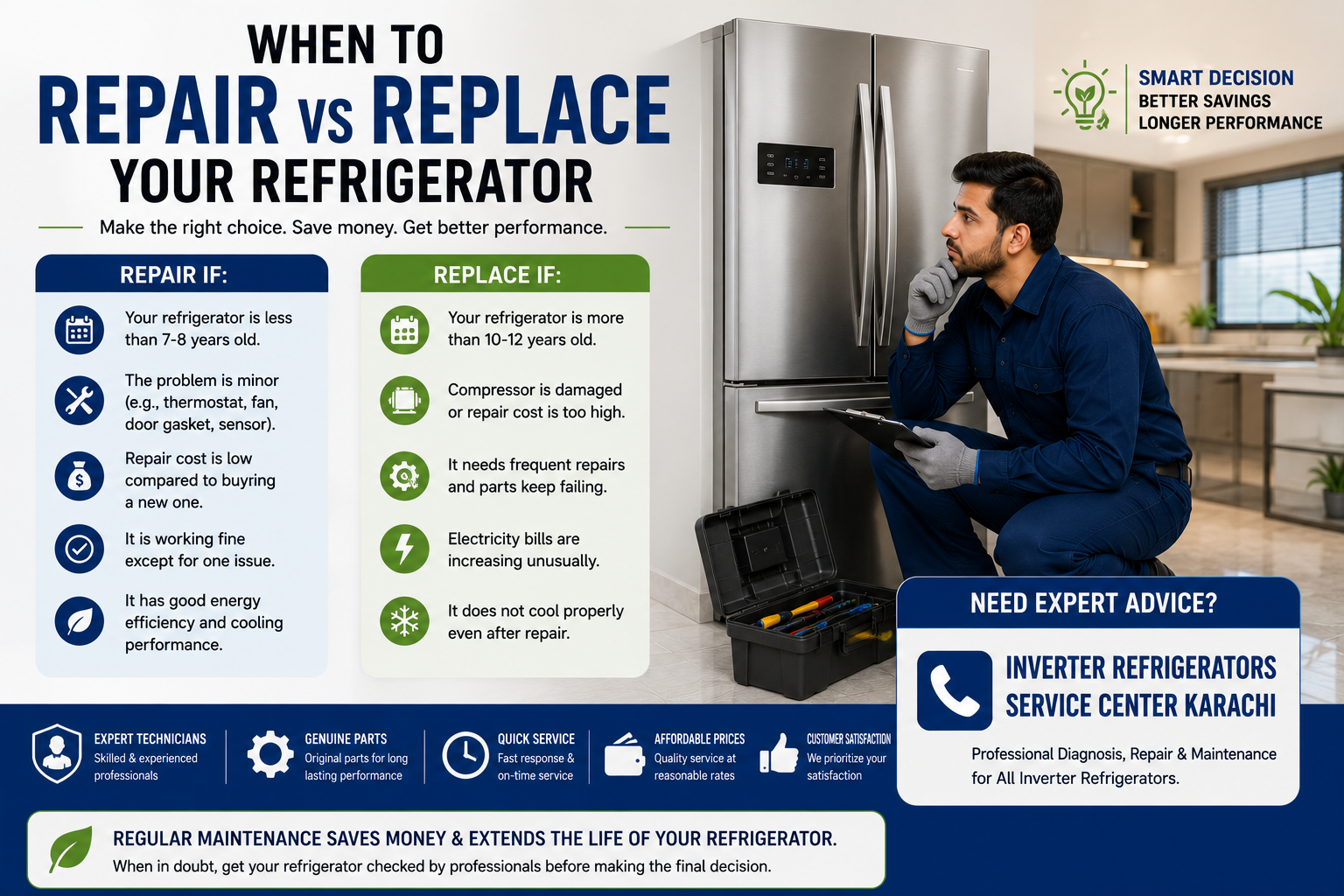
A refrigerator is one of the most important appliances in your home, and when it starts having problems, the big question is: Should you...
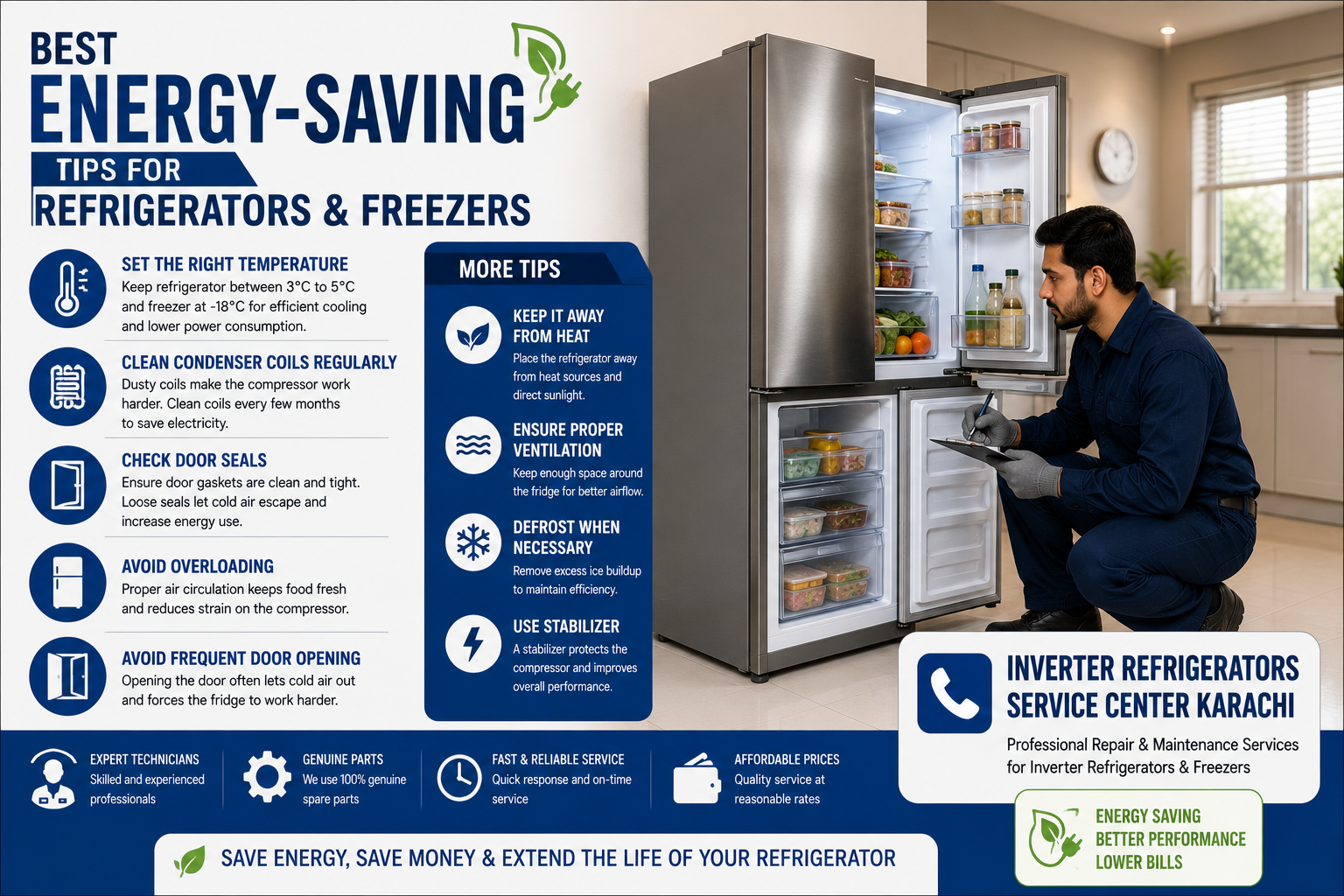
Refrigerators and freezers run continuously, making them some of the most important appliances in any home. Because they operate 24 hours a day, poor...