August 22, 2026

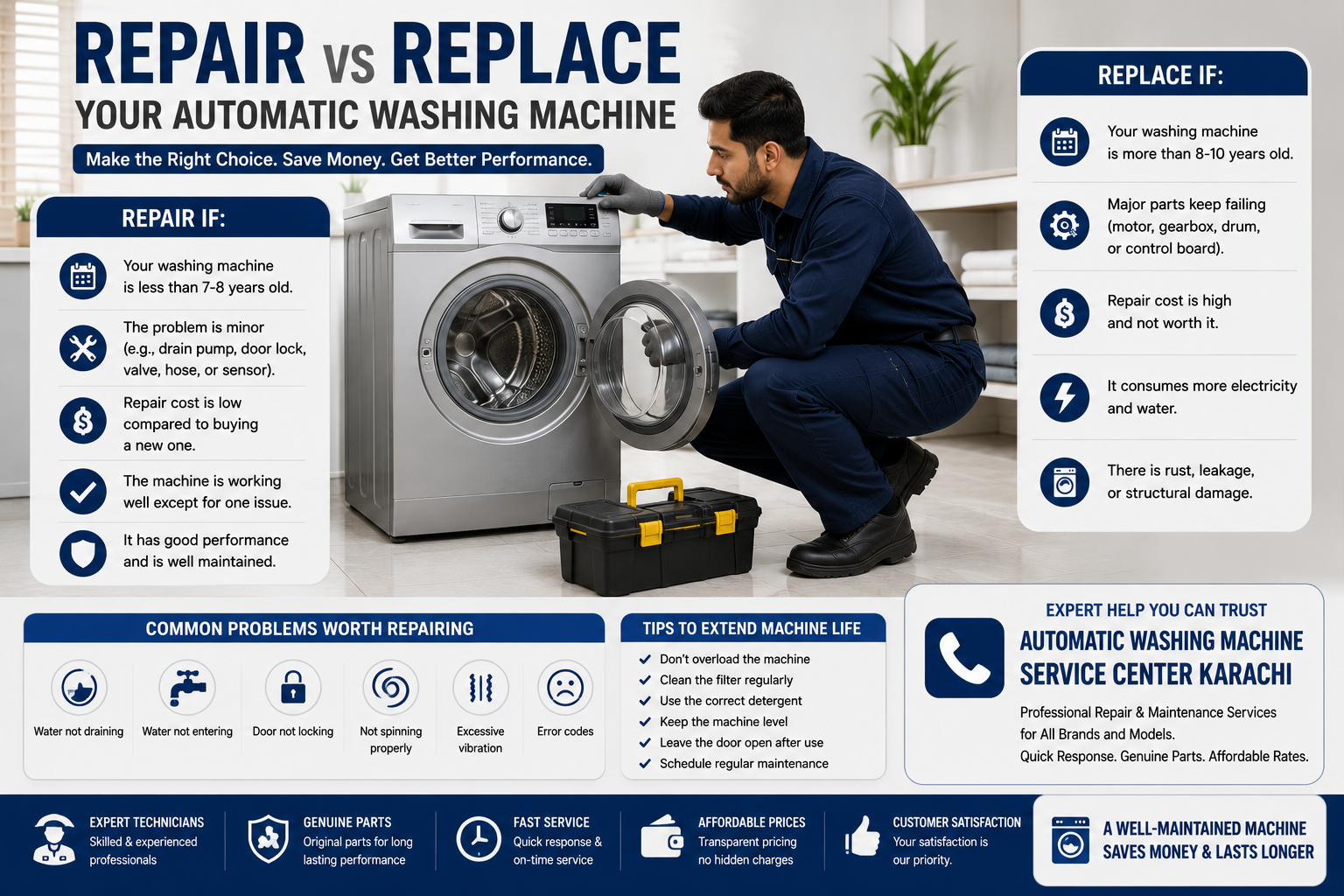
An automatic washing machine is a major part of everyday household life. When it starts making unusual noises, leaking water, stopping during cycles, or...


Before touching any appliance, there is one non-negotiable rule: disconnect it from the power supply. This applies whether you are cleaning a filter, checking a hose, or simply pulling the unit out to look at the back. It takes five seconds and can save your life.
In Karachi, voltage fluctuations are a constant reality. Many appliance faults that look like mechanical failures are actually caused by unstable electricity supply damaging sensitive electronic components. A voltage stabilizer for each major appliance is one of the smartest investments a homeowner can make.
You don’t need a professional workshop. These basic tools handle the majority of homeowner-level appliance checks and fixes.
Keep a simple appliance log — a notebook or phone note — recording each appliance’s purchase date, model number, and any repairs done. This speeds up diagnosis enormously when something goes wrong and helps technicians identify recurring patterns.
❄️
Cooling failures, frost buildup, water leaks, and strange compressor noises.
🌀
Spin failures, drainage problems, error codes, and door seal leaks.
🌬️
Weak cooling, indoor water dripping, foul smells, and high electricity bills.
🔥
No hot water, rusty water, pressure issues, and sediment buildup in tanks.
🍳
Not heating, turntable faults, sparking, and unresponsive control panels.
🫧
Poor cleaning results, drainage failures, door latch issues, and detergent problems.
The refrigerator is the one appliance nobody can afford to have down for long. Most common fridge problems follow recognizable patterns — and once you know what to look for, many can be resolved quickly.
🌡️
Start with the condenser coils — the grid of tubes at the back or underneath the fridge. When coated in dust, they can’t release heat efficiently, forcing the compressor to overwork. Vacuum them every six months. Also check the thermostat setting and inspect the door gasket using the paper test: close a piece of paper in the door. If it pulls out without resistance, warm air is leaking in and the gasket needs replacing.
❄️
A thick layer of frost building up on freezer walls means the auto-defrost system has failed. The defrost heater, defrost thermostat, or timer has likely stopped working. Manual defrosting — unplugging the unit for 24–48 hours with doors open — clears the ice temporarily, but the underlying fault will return. This is a repair best handled by a qualified technician at a trusted appliance repair service center in Karachi.
💧
Internal water pooling almost always means the defrost drain is blocked. Food particles and ice plug the small drain hole at the back of the freezer compartment. Pour warm water mixed with a little baking soda into the drain hole and clear the blockage. A turkey baster makes this job much easier. Clean the drain every few months to prevent recurrence.
⚠️ If the fridge compressor hums but the appliance never cools, or if you hear clicking sounds when it tries to start, the compressor or start relay may have failed. Do not continue running the appliance — contact a reliable appliance repair service center in Karachi for a proper diagnosis before the compressor sustains further damage.
In a city where summer temperatures regularly exceed 40°C, a functioning air conditioner is not a luxury — it is a necessity. The good news is that the majority of AC problems are caused by neglected maintenance that homeowners can handle themselves.
A clogged air filter is behind more AC problems than any other single cause. It restricts airflow, dramatically reduces cooling performance, increases electricity consumption, and can cause the evaporator coil to ice over. Most split AC filters slide out easily from the indoor unit, wash under lukewarm water, and air-dry before reinsertion. This five-minute task once a month prevents the majority of AC service calls.
Indoor dripping almost always means a blocked condensate drain pipe. The drain carries moisture from the indoor unit to the outside — over time, algae, dust, and mold clog it. Pour a diluted mixture of white vinegar or bleach into the drain line access point to clear the blockage. If dripping continues, the drain pan may be cracked or the unit may have been installed without proper tilt toward the drain.
If air is blowing but it’s not cold, the most likely causes are low refrigerant gas, a blocked outdoor condenser unit, or a failing compressor. Check the outdoor unit — is it caked in dust, blocked by leaves, or covered by garden furniture? Clear any obstructions to allow proper heat dissipation. If the outdoor unit is clear and the AC still isn’t cooling, refrigerant is the likely issue.
⚠️ Refrigerant recharging is not a DIY task. The gases involved are hazardous, require specialized equipment, and their handling is regulated. Always use a certified appliance repair service center in Karachi for any refrigerant-related work on your AC.
Automatic washing machines have sophisticated electronics, but their most frequent faults often trace back to one overlooked component or one simple habit. Here’s what to check before calling for help.
Almost every drainage failure, spin problem, and error code in a washing machine can be traced to a blocked drain filter. Coins, buttons, hair, and lint accumulate in this small component at the front base of the machine. Most homeowners never clean it — and then wonder why their machine keeps failing.
Before assuming a motor or belt failure, redistribute the laundry evenly inside the drum. An unbalanced load triggers the machine’s safety sensors to stop the spin cycle automatically. This is the cause of more than half of all ‘won’t spin’ calls to repair centers. Also ensure the door is firmly closed and latched — both front-loaders and top-loaders require a fully engaged door lock before spinning begins.
Always check every pocket before loading clothes into the washing machine. A single forgotten coin is enough to block the drain pump entirely. A bra underwire can wedge between the drum and outer tub, causing loud banging and costly damage. This 10-second habit prevents expensive repairs.
Honest appliance repair knowledge means knowing your limits. The following breakdown reflects the real-world boundary between what a careful homeowner can safely handle and what genuinely requires professional expertise.
ℹ️ If you are ever unsure which category a repair falls into, the safest default is always to call a professional. A good appliance repair service center in Karachi will tell you honestly if the fix is something you can do yourself — and a trustworthy one won’t charge you for that advice.
The single most effective thing a homeowner can do is follow a simple, consistent maintenance routine. The majority of expensive appliance repairs are entirely preventable with regular upkeep that costs almost nothing.
| Task | Appliance | Frequency | Type |
|---|---|---|---|
| Clean air filter | Air Conditioner | Monthly | DIY |
| Wipe door gasket and drum | Washing Machine | Monthly | DIY |
| Run hot empty drum clean cycle | Washing Machine | Monthly | DIY |
| Inspect power cords for damage | All Appliances | Monthly | DIY |
| Clean drain filter | Washing Machine | 3 Months | DIY |
| Clear condensate drain line | Air Conditioner | 3 Months | DIY |
| Test door seal (paper test) | Refrigerator | 3 Months | DIY |
| Vacuum condenser coils | Refrigerator | 6 Months | DIY |
| Full AC service and gas check | Air Conditioner | Annual | Professional |
| Geyser safety and sediment check | Geyser | Annual | Professional |
| Washing machine full service | Washing Machine | Every 2 Years | Professional |
✅ Following this schedule consistently prevents roughly 70% of common appliance breakdowns. The DIY tasks on this list are free — they cost only a few minutes of your time each month.
Geysers sit out of sight, often in utility areas or on rooftops, which means problems build up unnoticed. Here is what to watch for and what to leave strictly to qualified professionals.
Sediment buildup from Karachi’s hard water is one of the leading causes of geyser inefficiency and premature failure. Flushing the tank annually — connecting a hose to the drain valve and running water until it flows clear — is a safe homeowner task that significantly extends the unit’s life.
⚠️ Never attempt internal repairs on a geyser yourself — not the heating element, not the pressure valve, and certainly not any gas connections. A faulty geyser can cause serious injury. Call a certified appliance repair service center in Karachi for any geyser fault beyond basic external checks.
Karachi has no shortage of repair options, but quality varies widely. Knowing what to look for helps you avoid overcharging, counterfeit parts, and repairs that fail within weeks.
Save the contact number of a reliable appliance repair service center in Karachi before you actually need one. Finding a trustworthy technician under pressure — when your fridge has failed in peak summer heat — is far harder than researching calmly in advance.
Compressor failures, refrigerant leaks, control board faults, and gas-related repairs require professional tools, genuine parts, and certified expertise. Attempting them without training puts you, your family, and your appliance at risk.
🔧 Call a Certified Appliance Repair Service Center in Karachi
How can I tell if an appliance fault is caused by Karachi’s voltage fluctuations?
Voltage fluctuation damage often shows up as erratic behavior — an appliance that works intermittently, trips its circuit breaker repeatedly, or fails shortly after a power outage or load-shedding. Electronic components like control boards are especially vulnerable. If multiple appliances develop faults around the same time, or if problems started after a particularly severe power cut, unstable voltage is almost certainly involved. Installing a good voltage stabilizer on each major appliance is the most effective preventive measure for Karachi homeowners, and a qualified appliance repair service center in Karachi can assess whether existing damage is voltage-related.
Is it better to repair an old appliance or buy a new one?
The standard rule of thumb is straightforward: if the repair cost exceeds 50% of what a comparable new appliance would cost, replacement is usually the smarter financial decision. Age matters too — an appliance over 10 years old facing a major fault like compressor or motor failure is unlikely to be the most cost-effective repair. Newer appliances are also significantly more energy-efficient, which reduces electricity bills in the long run. A trustworthy technician will give you an honest assessment rather than recommend an expensive repair on an appliance that’s near the end of its practical life.
Why does my air conditioner smell bad when it first starts?
A musty or stale smell when the AC first turns on is almost always caused by mold, mildew, or bacteria growing inside the indoor unit — on the evaporator coil, the air filter, or inside the drain pan. In Karachi’s humid climate, this is extremely common, especially if the unit sits unused during cooler months. Cleaning the filter monthly and flushing the drain line regularly prevents most odors. If the smell is chemical or burning in nature rather than musty, switch the unit off immediately and call a professional — this indicates an electrical fault that requires urgent attention.
What should I do immediately when a home appliance stops working?
The first step is always to disconnect the appliance from the power supply — don’t just switch it off, physically unplug it or switch off the circuit breaker. Then check the obvious basics: is there a power outage in your area? Has the circuit breaker tripped? Is the appliance switched on at the wall? For washing machines, check if the door is properly closed. For fridges, check the thermostat setting. For ACs, check the filter. These simple checks resolve a surprising number of faults before any repair is needed. If the basics check out and the appliance still won’t work, contact a reliable appliance repair service center in Karachi rather than attempting to open the unit yourself.
Taking good care of your home appliances doesn’t require technical expertise — it requires consistency, attention, and the wisdom to know when a problem is within your capabilities and when it isn’t. The tips in this guide cover the most common faults across the appliances every Karachi household depends on daily.
Simple habits — cleaning filters, clearing drains, checking door seals, keeping appliances level — prevent the vast majority of breakdowns before they ever happen. And when something more serious does arise, knowing when to reach out to a professional appliance repair service center in Karachi is just as valuable a skill as any DIY fix.
Treat your appliances well, maintain them consistently, and they will serve your home reliably through every sweltering Karachi summer and beyond.
An automatic washing machine is a major part of everyday household life. When it starts making unusual noises, leaking water, stopping during cycles, or...
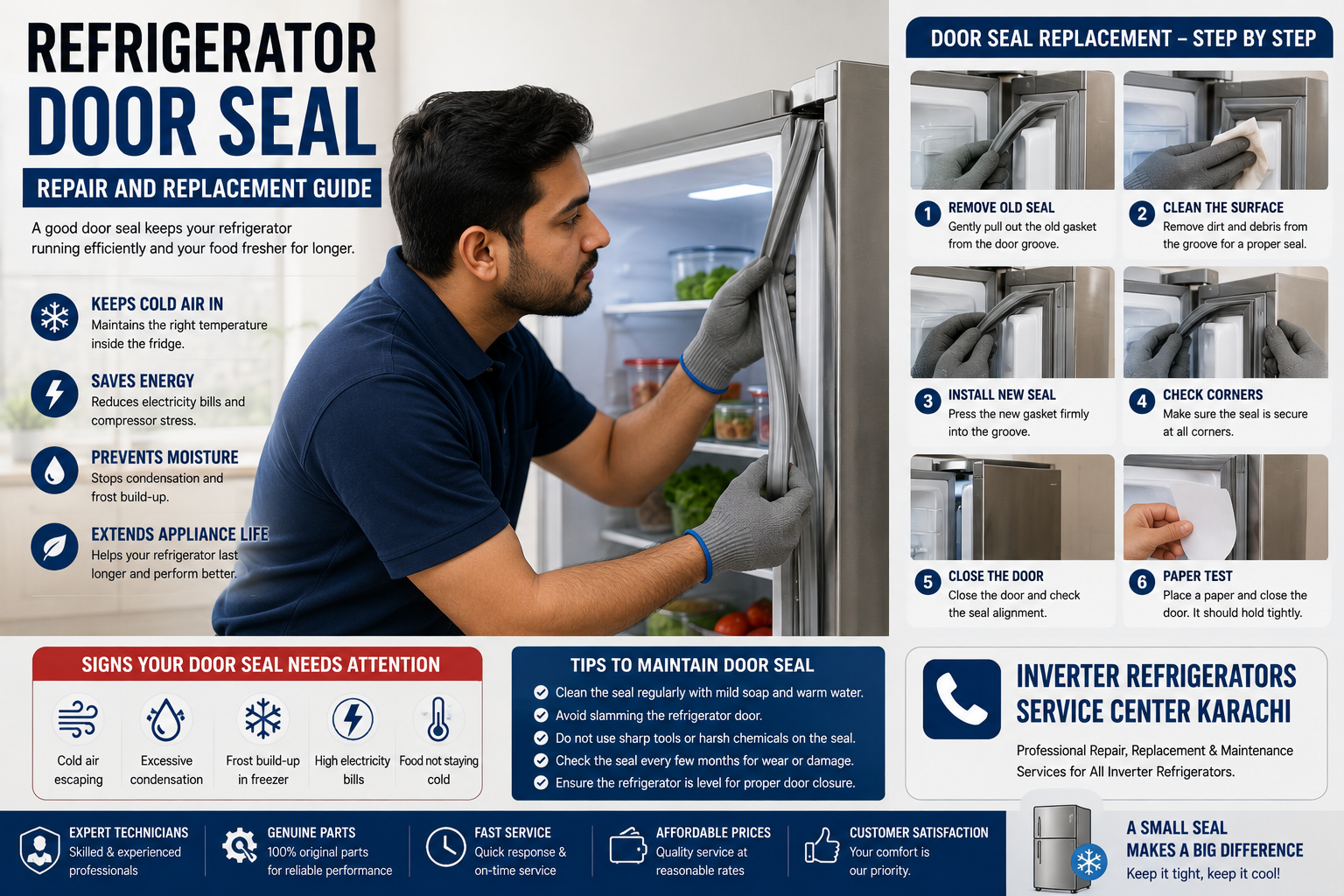
A refrigerator door seal, also called a gasket, plays an important role in keeping cold air inside the appliance. When the seal becomes loose,...

A refrigerator is one of the most important appliances in your home, and when it starts having problems, the big question is: Should you...