
August 22, 2026

An automatic washing machine is a major part of everyday household life. When it starts making unusual noises, leaking water, stopping during cycles, or...


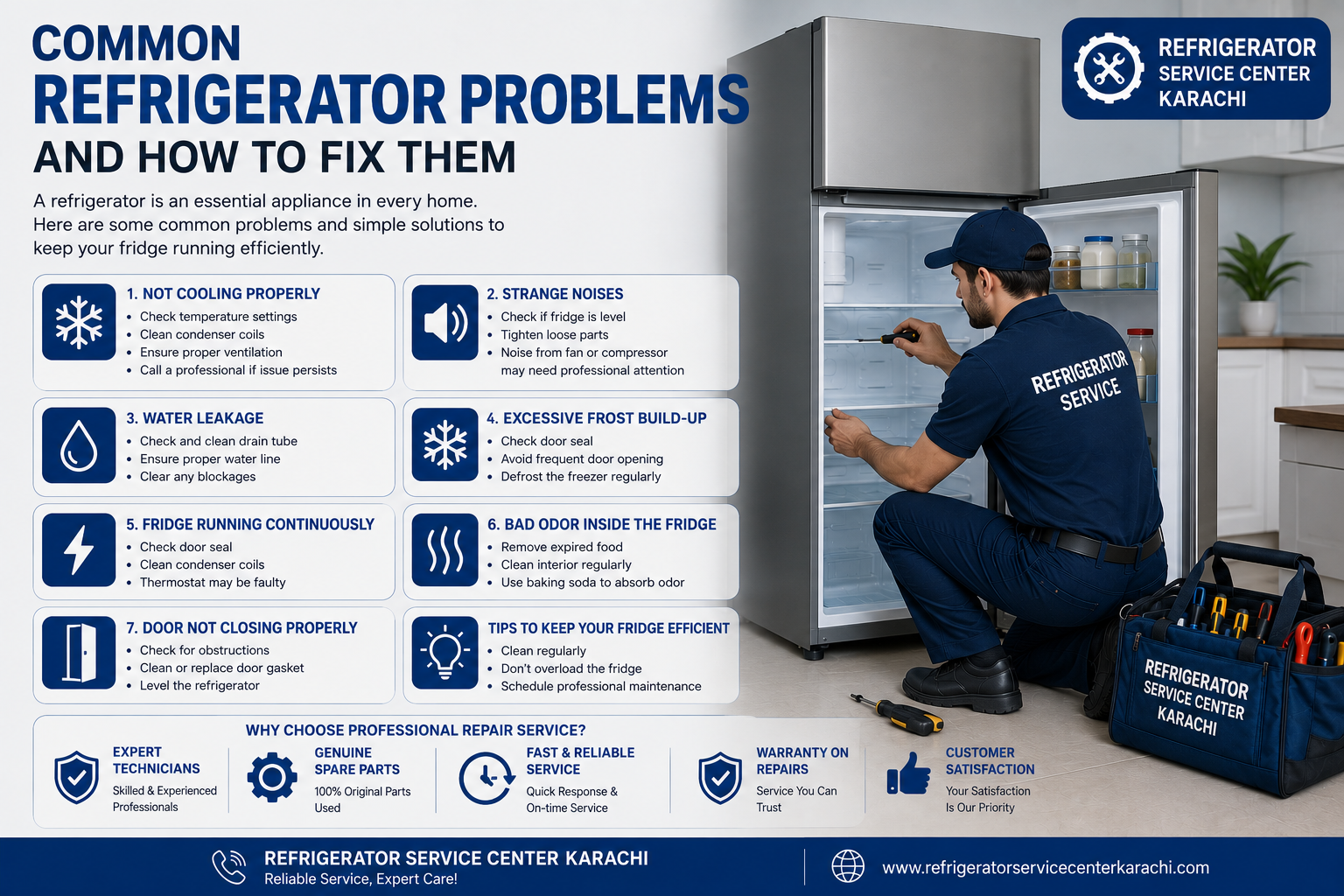
Your refrigerator works around the clock, seven days a week, keeping your food fresh and safe. So when it starts acting up — making strange noises, not cooling properly, or leaking water — it can feel like a crisis. The good news? Many common fridge problems have simple solutions you can try at home. And when they don’t, a trusted refrigerator service center in Karachi is just a call away.
Every appliance has a lifespan, and refrigerators are no different. With constant use, temperature changes, and wear on mechanical parts, issues are bound to arise eventually. Understanding why problems occur helps you take better care of your appliance and catch problems early — before they turn into expensive repairs.
Most refrigerator issues fall into a handful of recurring categories: cooling failures, unusual noises, water leaks, frost buildup, and electrical faults. Let’s walk through each one.
🌡️
The most common complaint — food spoils faster than it should, or the freezer isn’t freezing.
💧
Puddles forming under the crisper drawer or inside the fridge compartment.
❄️
Ice forming inside the freezer, blocking vents and reducing efficiency.
🔊
Rattling, humming, clicking, or buzzing sounds that weren’t there before.
💡
The light inside the fridge stays off when you open the door.
🚪
The rubber gasket around the door is cracked, torn, or not sealing properly.
This is by far the most reported issue. You open the fridge and notice things aren’t as cold as they should be, or ice cream in the freezer has softened. Before calling a repair service, run through these checks.
⚠️ If the compressor is running but the fridge still isn’t cooling, the refrigerant may have leaked. This is not a DIY fix — contact a professional at a reliable refrigerator service center in Karachi for safe handling.
Finding water pooling inside your fridge or on your kitchen floor is frustrating. Here’s how to trace the source.
The most common cause of internal leaking. Food particles or ice can block the defrost drain — a small hole usually found at the back of the freezer compartment. Pour a mixture of warm water and a few drops of dish soap into the drain to clear it out. A turkey baster works perfectly for this.
If your fridge has an ice maker or water dispenser, check the water supply line at the back. A loose connection or small crack can drip water onto the floor. Tighten fittings or replace the line if damaged.
Pull your fridge away from the wall at least once a year to inspect the water line and condenser coils. This 10-minute check can prevent major problems down the line.
A thin layer of frost is normal, but if your freezer looks like an igloo, something is wrong. Frost buildup usually means warm, moist air is getting in — or the auto-defrost system has failed.
As mentioned earlier, a faulty door seal is a primary culprit. Warm air sneaking in causes moisture to freeze on the interior walls. Inspect the gasket for any tears, hardening, or misalignment.
Modern refrigerators have an automatic defrost cycle. If the defrost heater, defrost thermostat, or defrost timer fails, frost builds up rapidly. Testing these components requires a multimeter and basic electrical knowledge. If you’re not comfortable with this, it’s best handled by a professional.
Refrigerators aren’t silent, but certain sounds are red flags. Here’s a quick guide to decoding what your fridge is telling you.
Usually caused by the fridge not sitting level, or items placed on top vibrating. Adjust the leveling feet at the base of the appliance, and clear anything resting on the unit.
A consistent, loud hum could indicate the compressor is working overtime — possibly due to dirty coils or a failing start relay. The start relay is an inexpensive part you can test and replace yourself.
Repeated clicking, especially when the compressor tries to start, often points to a faulty start relay or compressor. If the fridge clicks and never runs, the compressor may need replacement — which is a job for an expert at your nearest refrigerator service center in Karachi.
Record the noise with your phone and share it with a technician. Sound is one of the most useful diagnostic tools for refrigerator faults.
If the interior light doesn’t come on when you open the door, don’t panic — it’s usually a minor fix.
Check your fridge’s manual for the correct bulb type (LED or incandescent). Most bulbs twist or pull out and are readily available at hardware stores in Karachi.
There’s a small switch inside the door frame that triggers the light when the door opens. Press it manually — you should hear a click. If the light still doesn’t work when you release it, the switch may need replacement.
Some refrigerator problems — compressor failure, refrigerant leaks, electrical faults — require professional tools and certified expertise. Attempting these repairs without training can cause further damage or safety hazards.
🔧 Trust a Certified Refrigerator Service Center in Karachi
It’s smart to know your limits. While many issues can be resolved at home, the following situations call for professional help:
A qualified refrigerator service center in Karachi can quickly diagnose the root cause, source genuine spare parts, and complete repairs safely — saving you time, money, and the risk of making things worse.
Prevention is always better than cure. A little routine care goes a long way in extending your fridge’s life.
Dust-covered condenser coils force the compressor to work harder, raising electricity bills and shortening the appliance’s lifespan. A quick vacuum is all it takes.
Overpacking blocks airflow; an almost empty fridge struggles to maintain temperature. Aim for about 75% capacity for optimal efficiency.
Wipe door seals monthly with a damp cloth and a little baking soda. This keeps them flexible and ensures a tight seal.
Placing hot food directly in the fridge raises the internal temperature and forces the compressor to overwork. Let cooked food cool to room temperature before refrigerating.
Set a calendar reminder every 6 months to clean the condenser coils and inspect the door gasket. These two steps alone can add years to your refrigerator’s life.
How do I know if my refrigerator’s compressor is failing?
Common signs include the fridge not cooling at all, a clicking sound when it tries to start, excessive heat at the back of the unit, or the compressor running continuously without cycling off. If you notice these symptoms, contact a refrigerator service center in Karachi for a proper diagnosis rather than attempting repairs yourself.
Why is my fridge freezing food in the refrigerator compartment?
This usually happens when the thermostat is set too low, the temperature control sensor (thermistor) is faulty, or the damper that controls airflow between the freezer and fridge sections is stuck open. Start by raising the temperature setting. If the problem continues, the thermistor or damper likely needs replacement.
How long should a refrigerator last, and is it worth repairing an old one?
A well-maintained refrigerator typically lasts 12–17 years. As a general rule, if the repair cost is more than 50% of the price of a new fridge, or if the appliance is over 10 years old and facing a major failure, replacement may be the smarter investment. A technician at a trusted refrigerator service center in Karachi can help you make this call honestly.
Why is my refrigerator making a loud humming noise at night?
Refrigerators tend to run more frequently at night because ambient temperatures drop and the compressor cycles on to maintain the set temperature. However, if the humming is unusually loud or constant, it may indicate dirty condenser coils forcing the compressor to overwork, or a failing condenser fan motor. Cleaning the coils is a good first step before seeking professional help.
A refrigerator is one of the hardest-working appliances in your home, and keeping it in good shape doesn’t have to be complicated. Most minor issues — from clogged drains to dirty coils to worn-out gaskets — can be fixed with a little patience and the right know-how.
But when things get more serious, whether it’s a refrigerant leak, a failing compressor, or persistent electrical issues, don’t delay. Reaching out to a professional refrigerator service center in Karachi is the safest, most cost-effective move you can make. Trained technicians can pinpoint the problem fast, use genuine parts, and get your fridge running smoothly again.
Take good care of your refrigerator, and it will take good care of your food — for years to come.
An automatic washing machine is a major part of everyday household life. When it starts making unusual noises, leaking water, stopping during cycles, or...
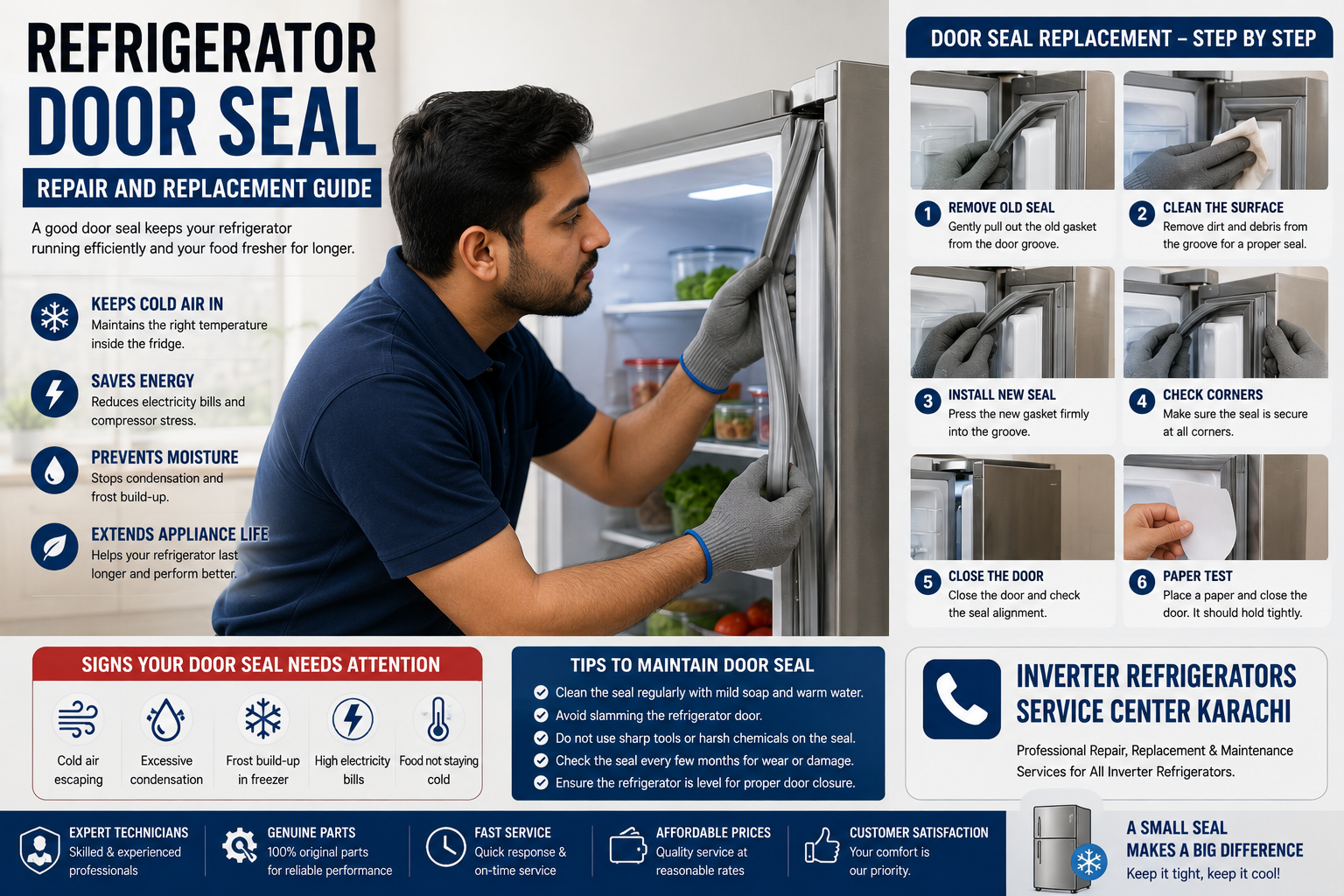
A refrigerator door seal, also called a gasket, plays an important role in keeping cold air inside the appliance. When the seal becomes loose,...

A refrigerator is one of the most important appliances in your home, and when it starts having problems, the big question is: Should you...