August 22, 2026

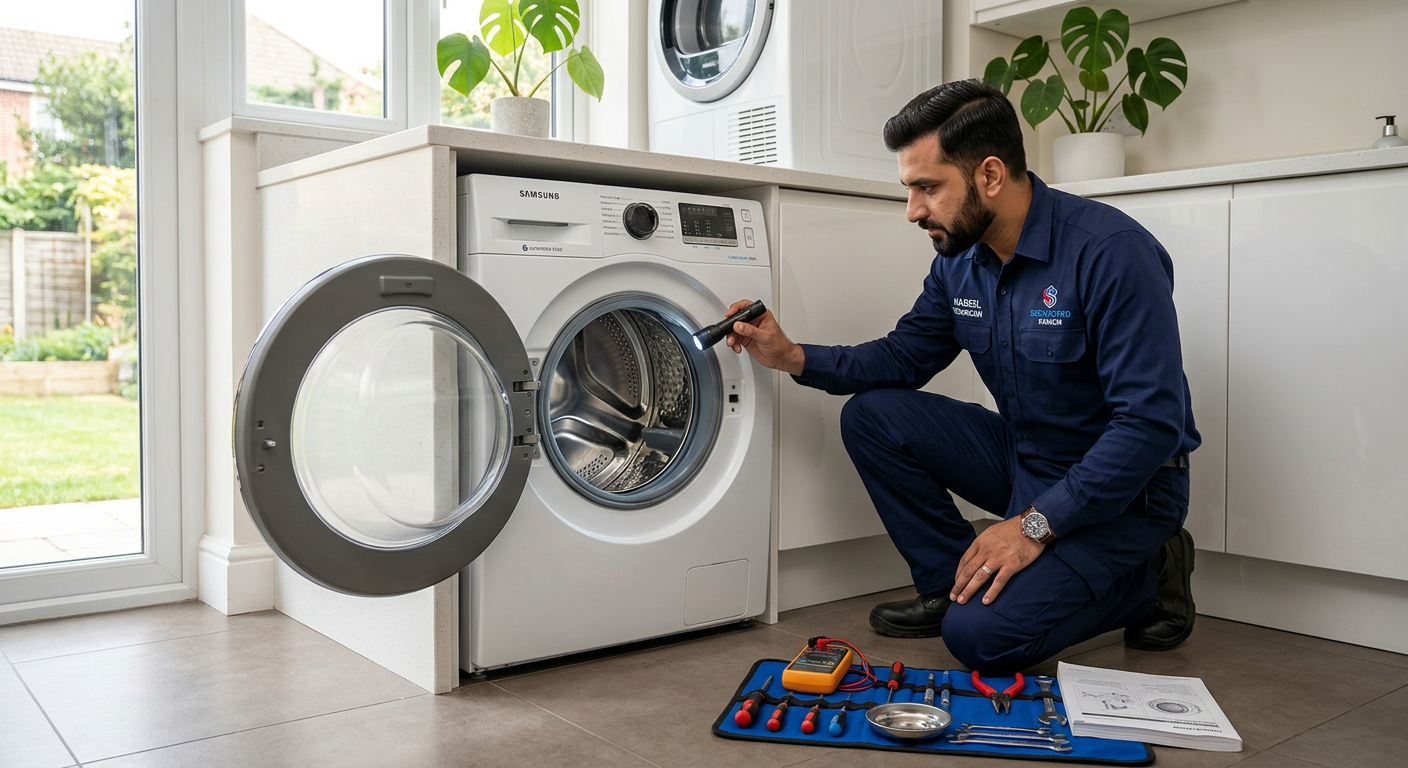
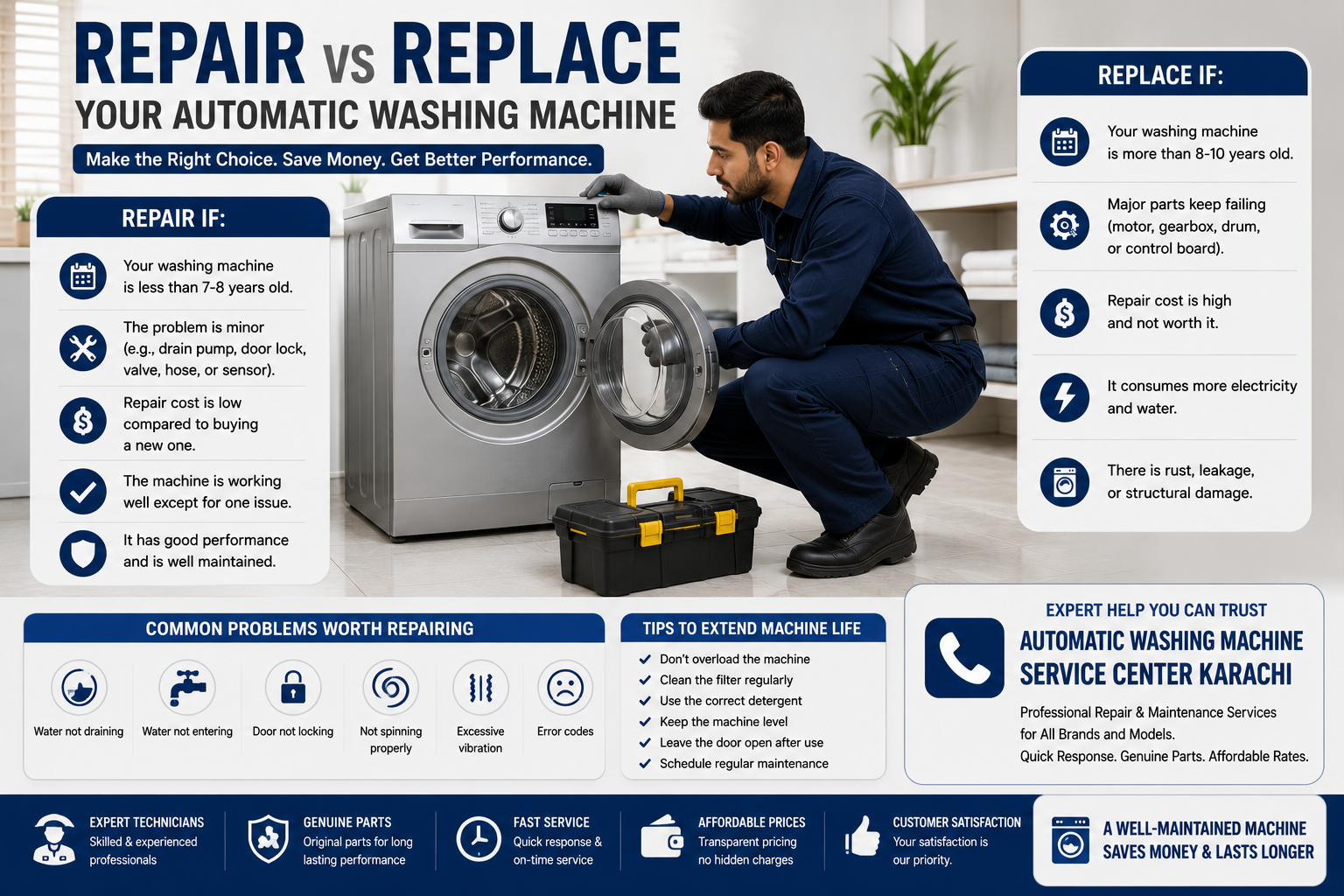
An automatic washing machine is a major part of everyday household life. When it starts making unusual noises, leaking water, stopping during cycles, or...


Automatic washing machines have made laundry day significantly easier. But like every appliance, they can run into problems — a drum that won’t spin, water that won’t drain, or error codes flashing on the display. Before you panic, know that many of these issues have straightforward fixes. And when they don’t, a professional automatic washing machine service center in Karachi can get your machine running like new.
Modern automatic washing machines are complex appliances with motors, pumps, sensors, and electronic control boards all working together. Over time, wear and tear, improper use, hard water deposits, and blocked filters can cause a range of issues.
The good news is that most common problems follow recognizable patterns. Once you know what to look for, you can either fix it yourself or give a technician a clear picture of what’s wrong — saving time and money.
🔄
The drum fills with water but refuses to spin or agitate during the wash cycle.
💧
Water sits at the bottom of the drum even after the cycle completes.
🚿
Water pooling under or around the machine during or after a wash cycle.
🔊
Banging, rattling, or grinding sounds during spinning or washing.
❌
The display shows error codes like E1, E3, or F5 and the machine stops mid-cycle.
🌊
The machine starts but water doesn’t enter the drum at all.
A drum that won’t spin is one of the most common complaints. Your clothes end up soaking wet at the end of the cycle — which is both frustrating and damaging to fabrics. Here’s where to start.
Automatic machines have sensors that detect an unbalanced drum. If you’ve stuffed in a heavy duvet on one side, the machine may refuse to spin to protect itself. Open the door, redistribute the laundry evenly, and restart the spin cycle.
Front-loaders and top-loaders both have safety switches that prevent spinning if the door isn’t properly latched. Check the door lock mechanism — it may be faulty or simply not engaged. Try firmly pressing the door shut before starting.
The drive belt connects the motor to the drum. Over time it can stretch, slip, or snap. If you can turn the drum by hand very easily with no resistance, the belt is likely the problem. Replacing a drive belt is a moderately skilled DIY repair.
Never overload your washing machine. Most automatics work best at 80% capacity. Overloading strains the motor and belt, shortening the machine’s life significantly.
If water remains in the drum after the cycle ends, the machine has a drainage problem. This is one of the easiest issues to diagnose and often fix yourself.
Every automatic washing machine has a drain filter — usually located at the front bottom behind a small panel. Coins, lint, buttons, and small socks are notorious for clogging it. Cleaning this filter every 2–3 months is essential maintenance.
The drain hose runs from the back of the machine to the wall outlet. If it’s kinked, crushed, or clogged, water can’t exit. Pull the machine forward carefully and inspect the full length of the hose for any bends or blockages.
⚠️ If the drain pump itself is making a humming sound but water isn’t draining, the pump motor may have failed. This requires professional repair — reach out to an automatic washing machine service center in Karachi for a quick assessment.
A leaking washing machine can damage your flooring and create a safety hazard. Identifying where the leak is coming from is the first step.
Front-loading machines have a rubber door gasket — the seal around the drum opening. Over time, mold, grime, or small tears in this gasket cause leaks. Inspect it carefully and clean it with a damp cloth. If it’s torn, it needs replacement.
Check the inlet hose (bringing water in) and the drain hose (taking water out). Loose connections or cracks in the hoses are common causes of bottom leaks. Tighten the hose clamps or replace the hose if cracked.
This surprises many people. Using too much detergent — or the wrong type — creates excessive suds that overflow from the drum. Always use HE (high-efficiency) detergent for automatic machines and follow the dosage guide on the packet.
Place a piece of dry paper towel under the machine overnight. In the morning, check where it’s wet — this pinpoints the exact source of the leak quickly and helps your technician diagnose it faster.
Washing machines make some noise during operation — that’s normal. But banging, grinding, or rattling that’s new or getting louder is a sign something is wrong.
Usually caused by an unbalanced load or the machine not sitting level on the floor. Adjust the leveling feet underneath the machine until all four feet are firmly on the ground. Use a spirit level to check.
Often a foreign object — a coin, bra wire, or button — trapped between the drum and the outer tub. Check the drum carefully and remove any objects. Always check pockets before loading clothes.
A deep grinding noise during the spin cycle often points to worn drum bearings. This is one of the more serious issues — bearings support the drum’s rotation, and once they go, the noise gets progressively worse. Bearing replacement is a complex repair best handled professionally.
Modern automatic washing machines communicate problems through error codes. While they can look alarming, most codes point to specific, fixable issues.
Always cross-check the error code with your machine’s manual, as codes vary by brand. Samsung, LG, Dawlance, and Haier machines each have their own code systems.
⚠️ If an error code keeps returning after you’ve tried the basic fix, don’t keep resetting the machine. Repeated resets can mask a deeper problem and cause further damage. Contact a reliable automatic washing machine service center in Karachi for a proper diagnosis.
You press start, the cycle begins, but no water enters the drum. This is a straightforward problem with a few likely causes.
First, check the basics — is the tap fully open? Is there a water outage in your area? In Karachi, water supply interruptions are common. If the tap is open and water is flowing, move on to checking the machine itself.
Where the inlet hose connects to the machine, there’s a small mesh filter. Karachi’s hard water deposits limescale on this filter over time, blocking water flow. Unscrew the hose, remove the mesh filter, and clean it under running water with an old toothbrush.
If the filter is clean but water still won’t enter, the solenoid inlet valve — which controls water flow into the drum — may have failed. This part can be tested with a multimeter and replaced if faulty.
Control board failures, motor faults, drum bearing replacements, and gas-related issues are beyond DIY territory. Attempting them without training risks injury and further damage to your appliance.
🔧 Trusted Automatic Washing Machine Service Center in Karachi
Knowing when to stop troubleshooting and call a professional saves you time, money, and the risk of making the problem worse. Here are clear signals it’s time to pick up the phone:
A certified technician at a trusted automatic washing machine service center in Karachi can quickly diagnose complex faults, source genuine spare parts for all major brands, and complete repairs safely and efficiently.
A little regular care goes a long way in preventing the problems above from ever happening in the first place.
Run a hot empty cycle with a cup of white vinegar or a washing machine cleaning tablet. This removes soap scum, limescale, and bacteria that build up inside the drum — especially important in Karachi’s hard water conditions.
As described above, a clogged filter is behind many drainage and spinning problems. Make it a routine — it takes less than 5 minutes.
Stick to 80% of the machine’s stated capacity. Consistently overloading puts stress on the motor, belt, and bearings — the three most expensive components to replace.
Always use detergent labeled for automatic or front-load machines. Too much detergent leaves residue inside the drum and hoses. Too little leaves clothes dirty. Follow the manufacturer’s dosage guide.
This allows moisture inside the drum to evaporate, preventing mold and mildew from growing on the door gasket — a very common problem in Karachi’s humid climate.
Check all pockets before loading clothes. A single forgotten coin is one of the leading causes of pump blockages and drum damage in automatic washing machines.
Why does my automatic washing machine stop mid-cycle and show an error code?
Mid-cycle stops are most commonly triggered by drainage issues, an unbalanced load, water supply interruptions, or a malfunctioning door lock. Start by checking the basics — is the drain filter clean? Is the door firmly closed? Is water flowing from the tap? If the error code keeps returning, it’s worth contacting an automatic washing machine service center in Karachi for a professional diagnosis to avoid further damage.
How long should an automatic washing machine last, and when is it better to replace than repair?
A well-maintained automatic washing machine typically lasts 10–14 years. As a general rule, if the repair cost exceeds 50% of the price of a comparable new machine, or if the appliance is over 10 years old and experiencing a major fault like motor or drum bearing failure, replacement is often the smarter investment. A qualified technician can help you make this decision honestly after assessing the machine.
Why does my washing machine smell bad even after washing clothes?
Unpleasant odors are almost always caused by mold, mildew, or soap scum buildup inside the drum, door gasket, or detergent drawer — especially common in humid cities like Karachi. Run a hot empty cycle with white vinegar or a cleaning tablet monthly. Always leave the door slightly open after each wash to let the interior dry out, and wipe the rubber door seal regularly with a damp cloth.
Is it safe to use my washing machine if it’s making a loud grinding noise?
It depends on the source of the noise. If it’s caused by a foreign object like a coin, you can usually remove it safely. But if the grinding is coming from the drum bearings — which you can confirm by spinning an empty drum by hand and listening for a rough, gravelly sound — continued use accelerates damage and can eventually cause the drum to seize. It’s best to stop using the machine and have it inspected by a professional at an automatic washing machine service center in Karachi as soon as possible.
Automatic washing machines are hardworking appliances, and occasional hiccups are part of their long life. Many of the most common issues — a clogged filter, an unbalanced load, a kinked hose, or too much detergent — are surprisingly easy to fix once you know where to look.
But for anything beyond basic troubleshooting — motor faults, control board failures, bearing replacements, or persistent leaks — the safest and smartest move is to call a professional. A trusted automatic washing machine service center in Karachi has the tools, genuine spare parts, and expertise to get your machine back in action quickly and safely.
Take care of your washing machine with regular maintenance, and it will reward you with years of reliable, efficient laundry cycles.
An automatic washing machine is a major part of everyday household life. When it starts making unusual noises, leaking water, stopping during cycles, or...
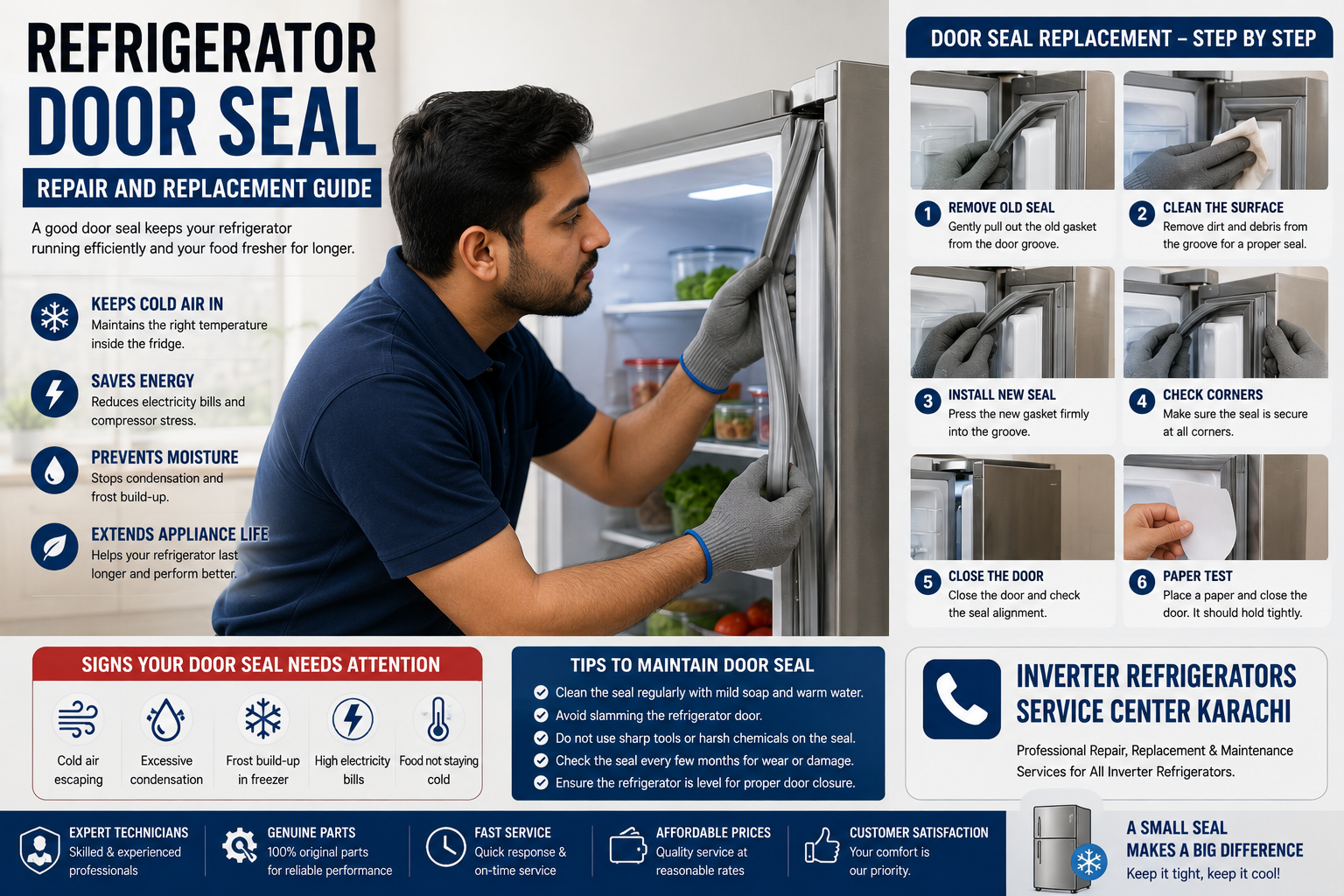
A refrigerator door seal, also called a gasket, plays an important role in keeping cold air inside the appliance. When the seal becomes loose,...
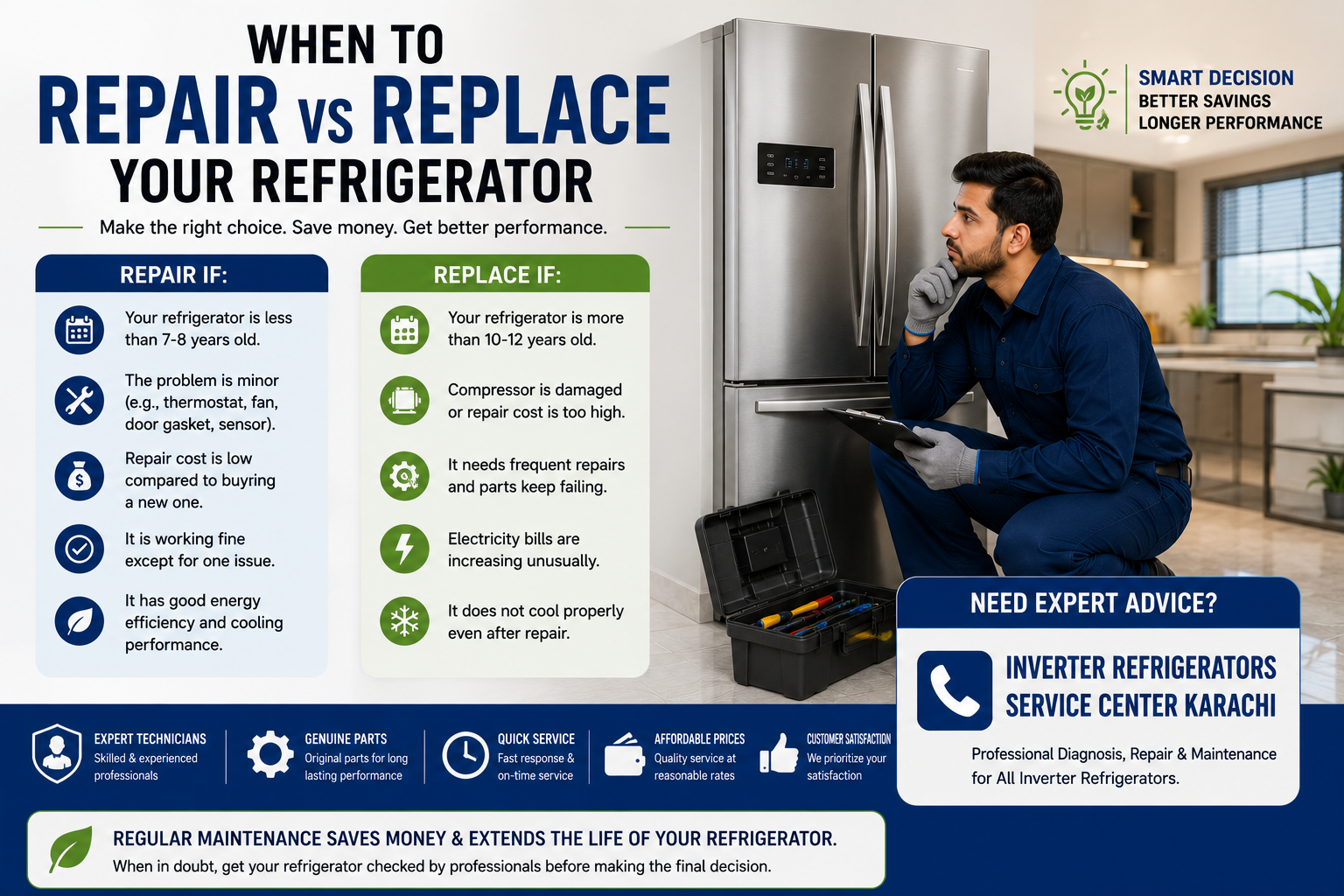
A refrigerator is one of the most important appliances in your home, and when it starts having problems, the big question is: Should you...