
November 20, 2026

Electrolux is a recognized home appliance brand known for products designed to make everyday household tasks easier. Its refrigerators, washing machines, air conditioners, microwave...


Load shedding is a common concern for many households in Karachi, especially during the hot summer months. When electricity goes out, refrigerators stop cooling, and food can become unsafe if the temperature rises for too long.
Meat, milk, vegetables, cooked meals, and other refrigerated products need proper storage to remain fresh. Frequent power outages can make it difficult to maintain the right temperature, particularly when the refrigerator is opened repeatedly.
The good news is that a few simple precautions can help protect your food, reduce waste, and keep your refrigerator working efficiently during electricity interruptions.
In this guide, we will explain practical fridge load shedding tips for Karachi homes, including how to keep food cold, manage freezer storage, reduce electricity consumption, and protect your refrigerator when power returns.
A refrigerator works by removing heat from its compartments and maintaining a temperature suitable for food storage.
When electricity goes out, the compressor stops operating. The refrigerator gradually begins to warm up, especially if the surrounding temperature is high.
In Karachi, hot weather can make this problem more serious because kitchen temperatures may rise significantly during the day.
According to general food safety guidance:
These are approximate guidelines, not guarantees. Actual safety depends on the refrigerator’s condition, room temperature, food quantity, and how often the doors are opened.
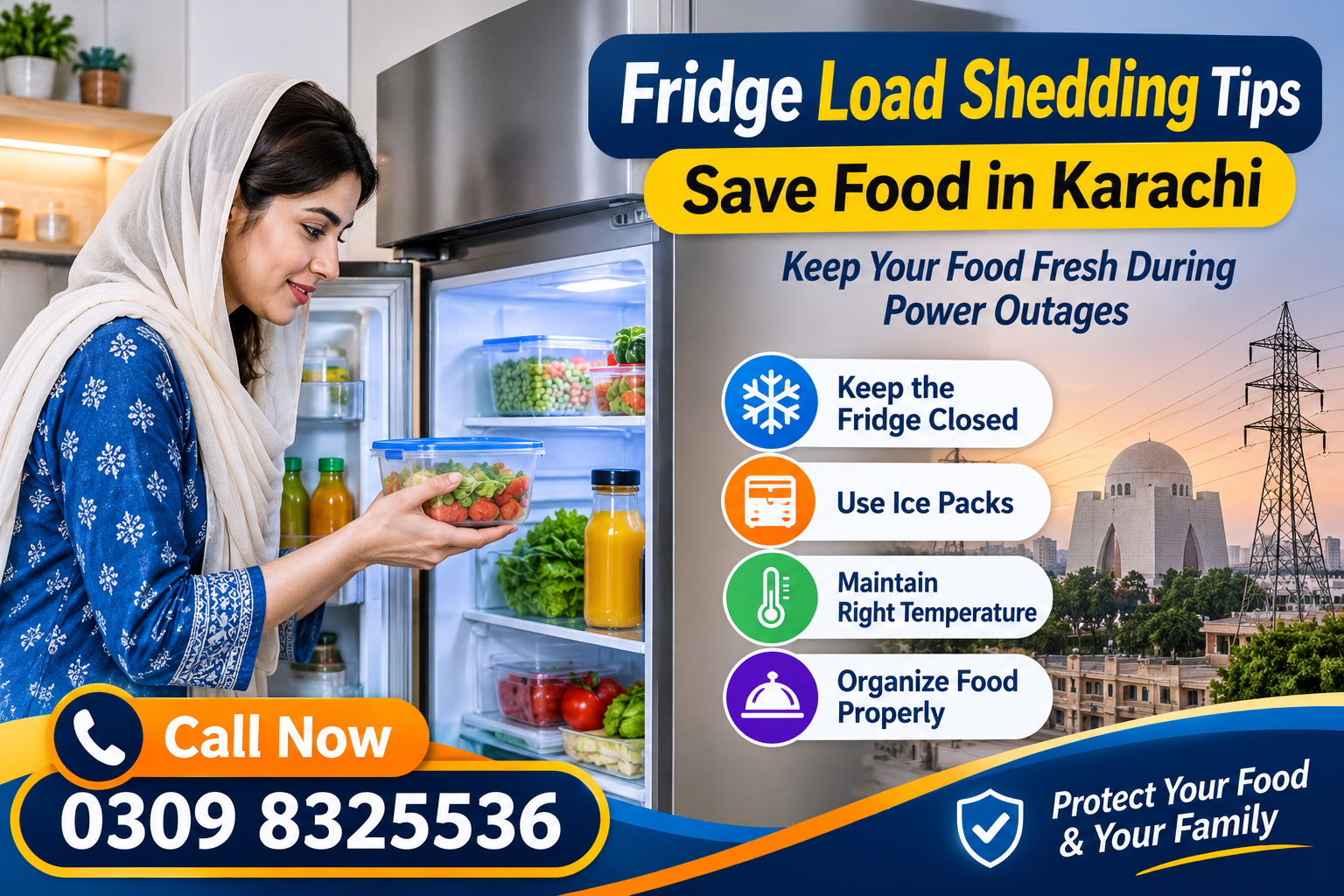
Keeping the refrigerator and freezer closed is one of the most important ways to protect food during load shedding.
Following these simple steps can help maintain refrigerator temperature and protect your food during electricity interruptions.
The most important rule during load shedding is to avoid opening the refrigerator unnecessarily.
Every time you open the door, warm air enters the compartment and cold air escapes.
This causes the refrigerator temperature to rise more quickly.
Before electricity goes out, take out anything you may need, such as drinking water, milk, or ingredients for cooking.
During the outage, keep the door closed as much as possible.
A full freezer generally stays cold longer than an empty freezer.
Frozen food items help maintain low temperatures because they store cold energy.
If your freezer has extra space, you can fill clean containers with water and freeze them.
These frozen containers can help keep the freezer cold during load shedding.
However, do not overload the freezer or block its ventilation areas.
Maintaining the correct refrigerator temperature is important for food safety.
For most refrigerators, the recommended settings are:
Use a refrigerator thermometer if possible.
A thermometer helps you understand whether the refrigerator is maintaining a safe temperature during electricity interruptions.
Do not rely only on how cold the food feels.
Proper food organization can reduce the time you spend opening the refrigerator.
Keep frequently used items in easily accessible places.
For example:
This helps you find items quickly without keeping the refrigerator door open for a long time.
Ice packs can help maintain cold temperatures during short power interruptions.
Keep reusable ice packs in the freezer so they are ready when needed.
If electricity goes out, these frozen packs can help maintain the temperature around stored food.
For longer outages, insulated coolers with ice packs may provide additional protection for perishable food.
Keep raw meat separate from ready-to-eat food to prevent contamination.
Putting hot food inside the refrigerator increases the temperature of the surrounding compartment.
During load shedding, this can make the situation worse.
Allow freshly cooked food to cool safely before refrigerating it.
However, do not leave perishable food at room temperature for extended periods while waiting for it to cool.
Divide large quantities into smaller, shallow containers so they cool more quickly and safely.
A damaged door gasket allows cold air to escape.
This can cause the refrigerator to warm up faster during load shedding.
Inspect the rubber seal around the refrigerator door.
Look for:
Clean the seal gently and make sure the door closes properly.
If the gasket is damaged, arrange replacement.
A properly sealed refrigerator helps maintain cooling and reduces unnecessary compressor operation.
A refrigerator needs sufficient airflow to maintain consistent temperatures.
Overloading it with food can block air circulation and make cooling less effective.
Keep space around air vents and organize food properly.
During load shedding, a well-organized refrigerator is easier to manage because you can quickly locate the items you need.
A refrigerator thermometer is a useful tool for households that experience frequent load shedding.
It helps you monitor the temperature inside the refrigerator and freezer.
If the refrigerator temperature rises above safe levels, you can take appropriate action.
For example, you may transfer vulnerable food to a properly cooled insulated container.
A thermometer is especially helpful because food can become unsafe even when it still looks or smells normal.
When electricity returns, the refrigerator may take time to restore its normal temperature.
Avoid immediately opening the door repeatedly.
Allow the appliance to cool and check its temperature.
If the refrigerator is not cooling properly after power returns, inspect the power supply and temperature settings.
If the problem continues, contact a qualified refrigerator technician.
Some foods are more sensitive to temperature changes than others.
Understanding which items need extra attention can help prevent food waste.
Milk, cream, yogurt, and other dairy products should remain properly refrigerated.
If the refrigerator has been without power for an extended period, check the temperature before using these products.
Do not taste food to determine whether it is safe.
If perishable dairy products have been exposed to unsafe temperatures for too long, discard them.
Raw meat, chicken, and seafood require careful temperature control.
These foods should be stored in the freezer if they need to remain frozen for longer periods.
Keep raw meat in sealed containers to prevent juices from contaminating other foods.
If frozen meat has thawed and been exposed to unsafe temperatures, it may need to be discarded.
Cooked rice, curry, vegetables, and other leftovers should be stored properly.
Use shallow containers and refrigerate them promptly.
During load shedding, avoid repeatedly opening containers or moving food unnecessarily.
If cooked food has remained at room temperature for more than 2 hours, it should generally be discarded.
In very hot conditions above 32°C, the safe room-temperature limit is generally reduced to 1 hour.
Some fruits and vegetables can tolerate short periods outside the refrigerator.
However, cut fruits, prepared salads, and other perishable items require proper refrigeration.
Keep food covered and avoid placing it near heat sources.
Long electricity interruptions require additional precautions.
If the refrigerator has been without power for more than 4 hours, do not assume everything inside is still safe.
Use a thermometer to determine whether the refrigerator has maintained a safe temperature.
If perishable food has been above 4°C for an extended period, it may no longer be safe.
If you have a cooler and sufficient ice packs, transfer vulnerable food into it.
Keep the cooler closed as much as possible.
Place raw meat in sealed containers and keep it separate from ready-to-eat items.
Frozen food that still contains ice crystals or has remained at 4°C or below can generally be refrozen, although quality may decrease.
If you are unsure how long food has been warm, do not take unnecessary risks.
Food safety is more important than avoiding waste.
Discard perishable food that has been exposed to unsafe temperatures for too long.
Do not rely on smell, appearance, or taste to determine whether food is safe.
Load shedding can also affect refrigerator operation, especially when electricity returns.
Following proper electrical precautions can help protect the appliance.
Voltage fluctuations can occur when electricity returns.
A suitable refrigerator voltage protector can help protect the appliance from certain voltage problems.
Choose a device compatible with your refrigerator’s electrical requirements.
Repeatedly switching the refrigerator on and off can interfere with normal compressor operation.
If your refrigerator has stopped because of a power interruption, allow the compressor to restart according to the manufacturer’s instructions.
Many refrigerators have built-in restart delays.
Make sure the refrigerator plug and socket are in good condition.
Avoid loose connections, damaged wiring, or overloaded extension cords.
If you notice burning smells, sparks, or electrical overheating, disconnect power if safe and contact a qualified electrician.
Keep sufficient space around the refrigerator.
Restricted ventilation can increase cooling workload and affect performance.
Avoid placing the refrigerator directly beside a stove or other heat-producing appliance.
An inverter refrigerator can be a useful option for households in Karachi.
However, it is important to understand what inverter technology actually does.
An inverter compressor adjusts its operating speed according to cooling demand.
This can help improve energy efficiency and maintain more consistent temperatures.
However, an inverter refrigerator does not automatically keep food cold during load shedding unless it has a suitable backup power source.
No.
An inverter compressor still requires electricity.
If you want your refrigerator to operate during load shedding, you need a suitable backup system such as a compatible UPS, inverter, or battery setup.
The backup system must be properly sized for the refrigerator’s starting and running power requirements.
Consult a qualified electrician before connecting a refrigerator to a backup power system.
Many households unknowingly make mistakes that cause refrigerator temperatures to rise quickly.
Avoid these common problems:
Small changes in daily habits can help protect food and improve refrigerator performance.
Load shedding in Karachi can create challenges for refrigerator food storage, especially during hot weather.
However, following simple fridge load shedding tips can help maintain cooling, reduce food waste, and protect your family’s health.
Keep refrigerator and freezer doors closed, maintain proper temperatures, organize food carefully, use ice packs when necessary, and check food safety after long electricity interruptions.
A properly maintained refrigerator, suitable backup power system, and good storage habits can make a significant difference during load shedding.
Remember that food safety should always come first. If perishable food has been exposed to unsafe temperatures for too long, discard it rather than taking unnecessary risks.
An unopened refrigerator can generally keep food safely cold for approximately 4 hours during a power outage. The actual time depends on the refrigerator’s insulation, room temperature, food quantity, and how often the door is opened.
Keep the refrigerator door closed, avoid opening it unnecessarily, maintain proper temperature settings, and use frozen ice packs when needed. An insulated cooler can also help protect perishable food during longer outages.
Food safety depends on the temperature inside the refrigerator, not just the duration of the outage. If perishable food has been above 4°C for more than 2 hours, it should generally be discarded. Use a thermometer to check conditions and follow food safety guidance.
An inverter refrigerator can operate during load shedding only if it receives electricity from a suitable backup power source. Inverter compressor technology improves how the compressor operates but does not provide electricity by itself.
Electrolux is a recognized home appliance brand known for products designed to make everyday household tasks easier. Its refrigerators, washing machines, air conditioners, microwave...

Toshiba is a well-known electronics and home appliance brand offering products designed for everyday convenience. Toshiba appliances, including refrigerators, washing machines, air conditioners, microwave...

Dawlance is one of the most popular home appliance brands in Pakistan, known for its refrigerators, washing machines, air conditioners, microwave ovens, and other...