
November 20, 2026

Electrolux is a recognized home appliance brand known for products designed to make everyday household tasks easier. Its refrigerators, washing machines, air conditioners, microwave...


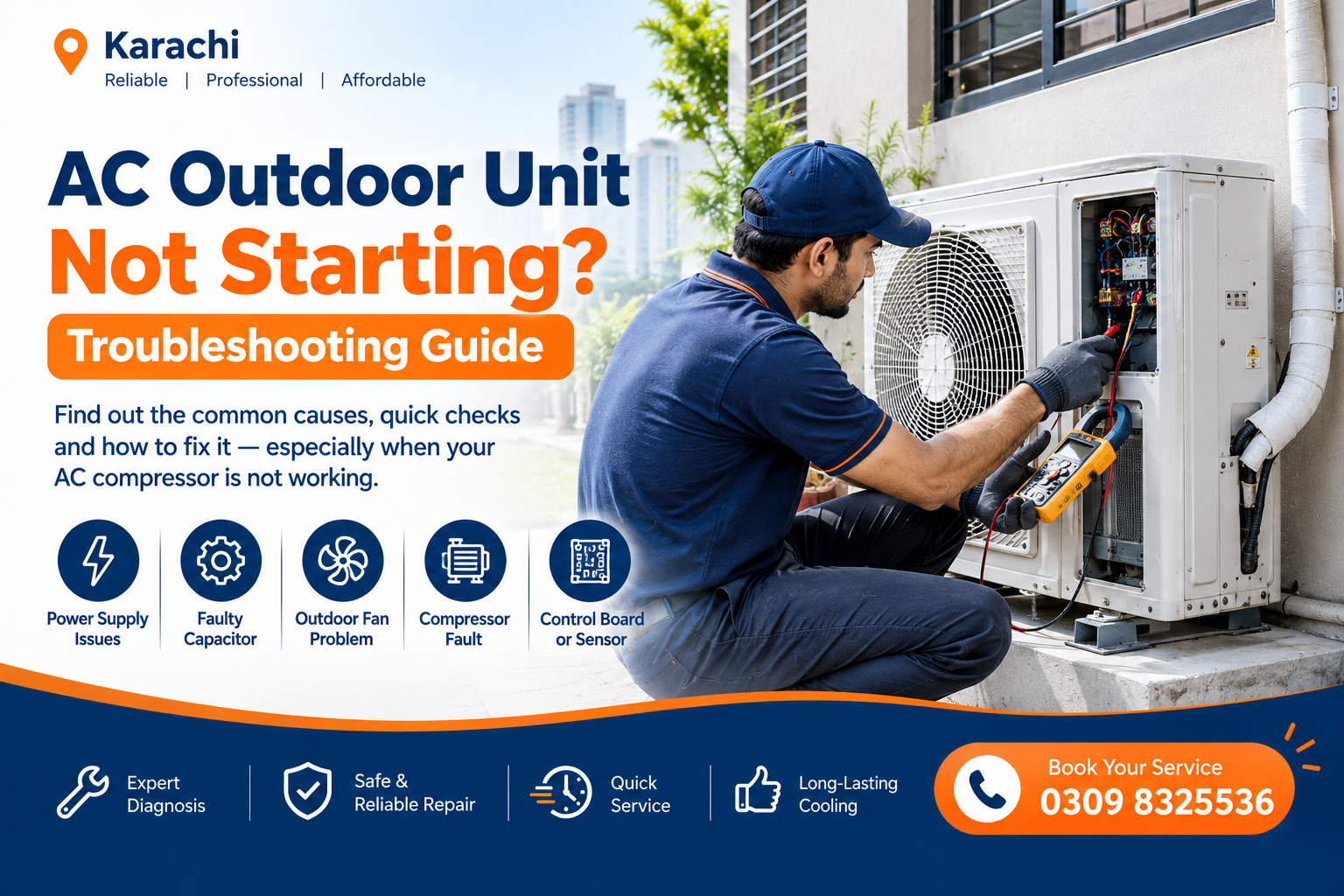
When your air conditioner runs indoors but the outdoor unit does not start, your room may remain warm even though the AC is switched on. In Karachi’s hot weather, this can quickly become uncomfortable.
The problem may involve the power supply, thermostat settings, capacitor, outdoor fan, compressor, or another electrical component. If you notice that your AC compressor not working, it is important to identify the cause before replacing parts unnecessarily.
This guide explains common reasons an AC outdoor unit fails to start, the basic checks you can safely perform, and when to call a professional technician.
The outdoor unit needs a reliable electrical supply to operate. If the circuit breaker has tripped, the disconnect switch is off, or a power connection is faulty, the outdoor unit may not start.
What you can check:
If the breaker trips repeatedly, do not keep resetting it. A repeated trip may indicate a short circuit, damaged wiring, or a faulty component that needs professional inspection.
Sometimes the outdoor unit is not faulty at all. The thermostat may be set to Fan mode, the temperature may be set too high, or the system may be following a built-in delay.
What you can check:
Set the AC to Cool mode and select a temperature lower than the current room temperature. Wait a few minutes for the system to respond.
Some AC models delay compressor startup to protect the system after switching off or after a power interruption. Check your manufacturer’s instructions before assuming that the compressor has failed.
A capacitor helps certain AC motors start and operate. If the capacitor becomes weak or fails, the outdoor fan or compressor may struggle to start.
You might notice:
Fix: A qualified technician can test the capacitor and replace it if necessary.
Do not open the outdoor unit or attempt capacitor replacement yourself. Capacitors can retain a dangerous electrical charge even after the power is switched off.
The outdoor fan moves air through the condenser coil to release heat. If the fan motor is damaged, the fan may stop spinning or operate unusually slowly.
A fan problem can cause the outdoor unit to overheat and may trigger protective shutdowns.
Fix: Turn off the AC if the outdoor fan is not operating normally or the unit is overheating. Have a technician inspect the fan motor, capacitor where applicable, and electrical connections.
Avoid pushing the fan blades by hand or placing tools inside the outdoor unit.
Some AC systems use a contractor to connect electrical power to the outdoor components. If the contractor or its control circuit fails, the compressor and fan may not receive the power needed to start.
Loose or damaged wiring can also prevent the outdoor unit from operating.
Fix: A technician should inspect the contractor, wiring, control signals, and electrical connections.
Electrical testing and repairs should be performed by a qualified professional because outdoor AC units contain high-voltage components.
An AC compressor may stop operating if it becomes too hot. Possible causes include poor airflow, a dirty condenser coil, electrical problems, or another system fault.
Some compressors have protective devices that stop operation until the temperature decreases.
Fix: Switch off the AC and allow it to cool. If the compressor repeatedly stops or fails to restart, arrange professional inspection.
Do not keep turning the AC on and off in an attempt to force the compressor to start.
The outdoor condenser releases heat from the refrigerant. If the coil is covered with dust or debris, heat transfer becomes less effective.
The AC may struggle during hot afternoons, shut down unexpectedly, or fail to cool properly.
Fix: Keep the area around the outdoor unit clear of leaves, rubbish, and other obstructions.
If the condenser coil requires cleaning, arrange suitable servicing. Avoid opening electrical panels or directing high-pressure water at the unit.
Low refrigerant caused by a leak can affect compressor operation and cooling performance. Some systems may shut down because of protective controls or abnormal operating conditions.
However, a compressor that does not start is not automatically a sign of low refrigerant. Power supply, capacitor, fan, and control problems can produce similar symptoms.
Fix: A qualified technician should check the refrigeration system and investigate possible leaks before adding refrigerant.
Repeated gas refilling without fixing a leak is not a reliable solution.
Modern inverter Ac use electronic control boards and sensors to regulate compressor speed and system operation.
A faulty sensor, damaged control board, or communication problem between indoor and outdoor units may prevent the outdoor unit from starting.
Fix: Note any error code displayed on the indoor unit or remote. Share the code and AC model with your technician.
Electronic components should be diagnosed using suitable testing equipment rather than replaced based on guesswork.
If the compressor itself has developed a serious fault, the outdoor unit may fail to start or may repeatedly shut down.
Possible signs include unusual humming, repeated breaker trips, or a complete loss of cooling. These symptoms can also result from other electrical faults, so they do not confirm compressor failure on their own.
Fix: Have a technician test the compressor, electrical components, and control system before deciding whether it needs repair or replacement.
Because compressor replacement can be expensive, request a clear diagnosis and estimate before approving the work.
Before booking a repair, you can perform a few simple checks without opening the AC.
If the outdoor unit still does not start, turn off the AC and arrange professional inspection.
Important: If you notice sparks, smoke, a burning smell, damaged wiring, or repeated breaker trips, stop using the AC. Disconnect the power only if it is safe to do so. Do not open electrical panels or attempt compressor, capacitor, or refrigerant repairs yourself.
Contact a qualified technician if:
A professional can inspect the power supply, capacitor, fan motor, contractor, compressor, and control system to determine the actual cause.
Regular maintenance can help reduce the risk of unexpected breakdowns.
These steps cannot prevent every fault, but they can help identify problems before they become more serious.
An AC outdoor unit that fails to start may have a power supply issue, faulty capacitor, fan motor problem, damaged control board, or compressor fault.
If your AC compressor not working, do not immediately assume that the compressor needs replacement. Start with basic thermostat and power checks, then arrange professional diagnosis if the outdoor unit remains inactive.
Proper troubleshooting can help identify the actual fault, avoid unnecessary part replacements, and restore reliable cooling during Karachi’s hot weather.
The problem may involve thermostat settings, a startup delay, power supply, capacitor, contractor, fan motor, or control board. A technician can check which component is preventing the outdoor unit from starting.
A humming compressor may indicate a starting problem, such as a faulty capacitor or electrical issue. Turn off the AC and arrange professional inspection rather than repeatedly trying to restart it.
A refrigerant leak or abnormal system pressure can affect compressor operation, but low refrigerant is not the only possible cause. Proper diagnosis is needed before adding refrigerant.
No. If the breaker trips repeatedly, stop using the AC and contact a qualified technician. Repeatedly resetting the breaker can increase the risk of electrical damage or injury.
Electrolux is a recognized home appliance brand known for products designed to make everyday household tasks easier. Its refrigerators, washing machines, air conditioners, microwave...
Toshiba is a well-known electronics and home appliance brand offering products designed for everyday convenience. Toshiba appliances, including refrigerators, washing machines, air conditioners, microwave...

Dawlance is one of the most popular home appliance brands in Pakistan, known for its refrigerators, washing machines, air conditioners, microwave ovens, and other...