
November 20, 2026

Electrolux is a recognized home appliance brand known for products designed to make everyday household tasks easier. Its refrigerators, washing machines, air conditioners, microwave...

inge their possible causes can help you identify the issue and arrange the right repair.
In this guide, we will explain why a water dispenser is not cooling or leaking, common problems, troubleshooting methods, maintenance tips, and when to contact a professional technician for water dispenser repair Karachi services.
A water dispenser uses a cooling system to lower the temperature of drinking water. Most compressor-based models use a refrigeration system similar to a refrigerator.
When one of its important components stops working, the dispenser may produce warm or room-temperature water.
Let’s explore the common reasons.
The compressor is one of the most important components of a water dispenser’s cooling system.
It circulates refrigerant through the cooling system to remove heat from the water tank.
If the compressor becomes damaged, the dispenser may stop producing cold water.
Common signs:
Solution:
A qualified technician should inspect the compressor, electrical connections, and starting components.
If the compressor is defective, repair or replacement may be required.
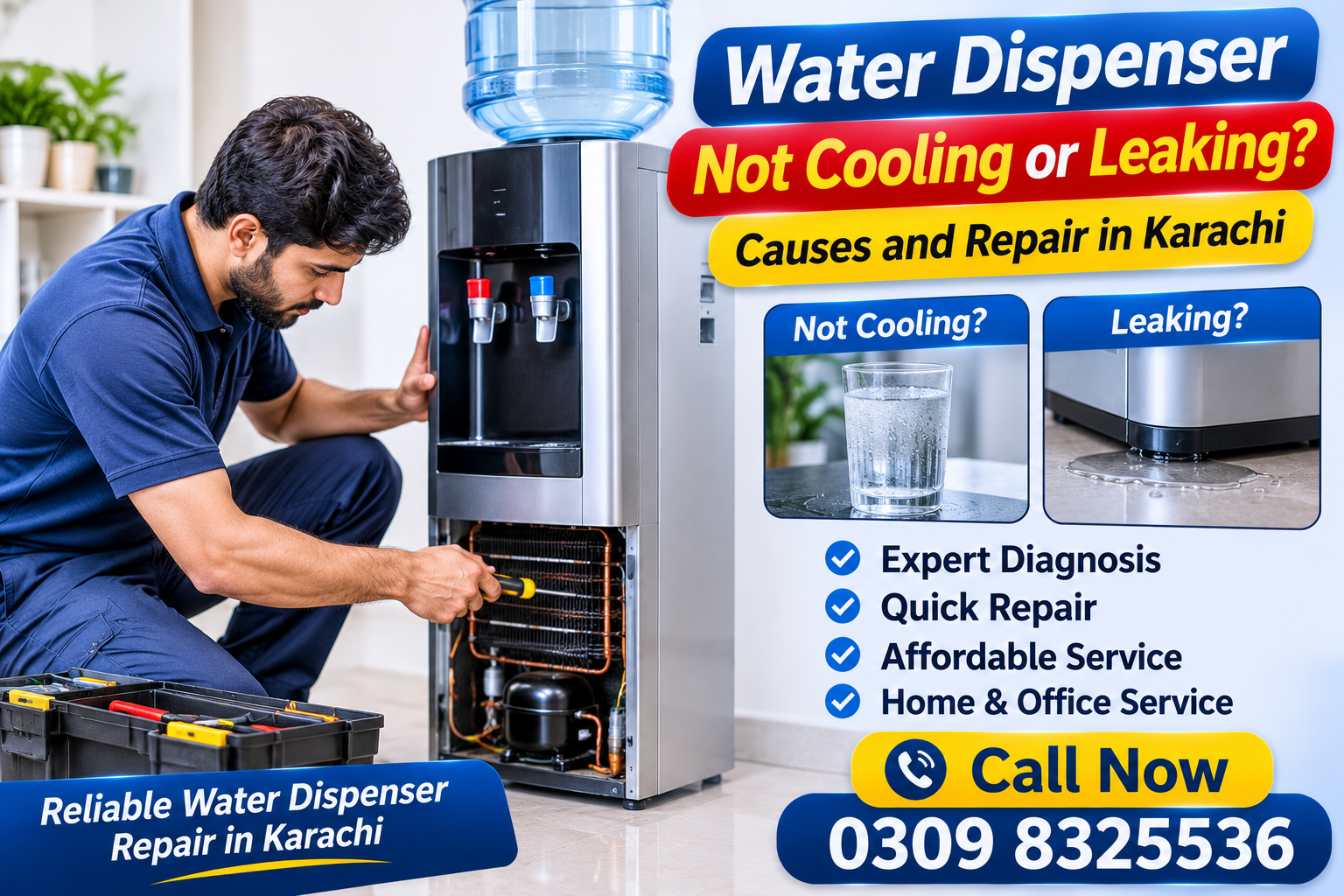
A water dispenser is an essential appliance in many Pakistani homes and offices. It provides cold and room-temperature water whenever needed, especially during Karachi’s hot summer months. However, problems such as water not cooling properly or leaking from the dispenser can become frustrating.
Sometimes, your water dispenser may stop producing cold water even though the compressor is running. In other cases, you may notice water collecting underneath the machine, dripping from the taps, or leaking around the water bottle.
If you are experiencing these problems, understand
Condenser coils release heat from the refrigeration system.
When dust and dirt accumulate around these coils, heat cannot escape efficiently.
This can reduce cooling performance and make the compressor work harder.
Common signs:
Solution:
Switch off and unplug the dispenser before cleaning accessible external ventilation areas.
Remove dust carefully using a soft brush or vacuum.
Avoid opening electrical or sealed refrigeration components.
The thermostat controls the cooling temperature inside the water dispenser.
If it becomes defective or incorrectly adjusted, the cooling system may not operate properly.
Common signs:
Solution:
A technician can test the thermostat and inspect its connections.
If it is defective, replacing it may restore proper cooling.
A water dispenser uses refrigerant to transfer heat from the water tank.
If the sealed refrigeration system develops a leak, cooling performance may decrease.
Common signs:
Solution:
A qualified refrigeration technician should locate the leak, repair the damaged section, and check the system before recharging it with the correct refrigerant.
Simply adding refrigerant without repairing the leak is not a proper solution.
Some water dispensers use a cooling fan to help remove heat from the condenser area.
If the fan stops working, heat may build up and reduce cooling efficiency.
Common signs:
Solution:
Have the fan motor, wiring, and ventilation system inspected by a technician.
A damaged fan may need replacement.
Continuous use can affect cooling performance.
If several people repeatedly draw cold water within a short period, the dispenser may need time to cool the replacement water.
Solution:
Allow the appliance sufficient time to restore its cold-water supply.
Avoid excessive continuous water dispensing and follow the manufacturer’s recommended usage instructions.
Water leakage is another common problem in dispensers.
A small leak may appear around the taps, bottle connection, water tank, or bottom of the appliance.
Ignoring leakage can damage nearby surfaces and potentially create electrical hazards.
Here are the common causes.
Sometimes, the dispenser itself is working properly, but the water bottle is damaged.
A cracked bottle or incorrectly fitted cap can allow water to escape.
Common signs:
Solution:
Check the bottle for visible cracks and make sure it is correctly fitted.
Replace damaged bottles and avoid forcing an incorrectly sized bottle into the dispenser.
Water dispenser taps are used frequently and can become loose or worn over time.
A damaged tap seal may cause continuous dripping.
Common signs:
Solution:
A technician can inspect the tap assembly and replace damaged seals or the complete tap if necessary.
The internal water tank stores water before it reaches the dispensing taps.
Over time, cracks or damaged connections may cause leakage.
Common signs:
Solution:
The tank and its connections should be inspected.
Depending on the damage and dispenser design, the tank may require replacement.
Some water dispensers have a drainage plug at the back or bottom for cleaning and draining water.
If this plug becomes loose or its seal is damaged, water may leak from the appliance.
Solution:
Switch off and unplug the dispenser.
Check the accessible drainage plug according to the manufacturer’s instructions.
Make sure it is properly secured and that its seal is not damaged.
Internal water pipes carry water between the bottle connection, storage tank, and taps.
A loose connection or cracked pipe can cause leakage.
Common signs:
Solution:
A professional technician can inspect the internal pipes and connections.
Damaged tubing or seals should be replaced with compatible parts.
Sometimes, a dispenser may leak because its water tank or internal water-control system is not functioning correctly.
Incorrect installation or a faulty connection can also contribute to overflow.
Solution:
Check that the water bottle is fitted correctly.
If water continues overflowing, stop using the dispenser and arrange professional inspection.
Before arranging a repair, you can perform a few basic checks without opening the appliance.
Make sure the dispenser is connected to a suitable electrical outlet.
Check whether the cooling switch is turned on.
If the circuit breaker trips or you notice electrical damage, stop using the appliance.
Many dispensers have separate switches for hot and cold water.
Make sure the cooling switch is enabled.
Allow sufficient time for the water to cool after switching on the appliance.
Make sure the bottle is properly positioned.
Look for cracks or visible leakage around the bottle opening.
Replace a damaged bottle if necessary.
Check whether water is dripping continuously from the hot or cold tap.
A worn tap seal may need replacement.
Make sure the rear and side ventilation areas are not blocked by walls, furniture, or other objects.
Proper airflow helps the cooling system release heat.
Look around the bottle connection, taps, and accessible drainage plug.
If water is leaking near electrical components or underneath the appliance, unplug it only if safe to do so and arrange professional repair.
Important: Never remove the dispenser’s outer cover or attempt to repair electrical or refrigeration components yourself.
Sometimes, the hot-water function works perfectly while the cold-water function stops operating.
This usually indicates a problem with the cooling system rather than the entire appliance.
Possible causes include:
A professional technician can test the cold-water system and identify the defective component.
Water dispensers are available in different designs, and their repair requirements can vary.
These models use a compressor and refrigeration system to cool water.
Common problems include compressor failure, refrigerant leakage, thermostat issues, and condenser problems.
Some models use therm o electric cooling technology instead of a traditional compressor.
Common problems may include cooling module failure, fan malfunction, and electrical connection issues.
These models provide both hot and cold water.
They contain separate heating and cooling systems.
Problems may include heating element failure, thermostat malfunction, cooling system faults, and tap leakage.
Water dispenser repair costs in Karachi depend on the brand, model, damaged component, spare parts availability, and technician charges.
Some problems require simple servicing, while others involve replacing expensive components.
Common repair requirements include:
Before approving any repair, request a proper inspection and cost estimate.
If the compressor or another expensive component is damaged, compare the repair cost with the price of a replacement dispenser.
Some water dispenser problems require professional diagnosis.
Contact a qualified technician if:
A professional technician can inspect the compressor, thermostat, cooling fan, water tank, taps, pipes, and electrical connections.
Timely repair can prevent further damage and help restore normal operation.
Regular maintenance can improve performance and reduce unexpected breakdowns.
Follow the manufacturer’s cleaning instructions to maintain proper hygiene.
Always disconnect the appliance from electricity before cleaning.
Remove dust from accessible external ventilation areas.
Good airflow helps the cooling system operate efficiently.
Use clean, properly fitted water bottles.
Avoid using cracked or damaged containers.
Check taps regularly for dripping and leakage.
Replace damaged seals when necessary.
Allow the dispenser enough time to cool water after heavy use.
Periodic inspection can help identify worn components, loose connections, and cooling problems before they become serious.
If your water dispenser is not cooling, leaking water, or producing unusual noises, professional inspection can help identify the actual problem.
Pakistan Service Center provides appliance repair assistance for common water dispenser problems, including cooling faults, compressor issues, tap leakage, thermostat problems, and water tank faults.
Whether your dispenser is installed at home or in an office, timely repair can help restore its performance.
Contact a qualified technician for inspection and repair advice.
A water dispenser that is not cooling or leaking can create inconvenience in your home or office, especially during Karachi’s hot weather.
Common cooling problems include faulty compressors, damaged thermostats, refrigerant leakage, dirty condenser coils, and cooling fan failure.
Water leakage may result from damaged bottles, loose taps, cracked tanks, or faulty internal connections.
Start with basic external checks, such as inspecting the water bottle, cooling switch, taps, and ventilation area.
If the problem continues, arrange professional inspection instead of attempting internal electrical or refrigeration repairs.
Regular cleaning, correct installation, and timely maintenance can help extend the life of your water dispenser and maintain reliable performance.
Common causes include a faulty compressor, defective thermostat, refrigerant leakage, dirty condenser coils, or a damaged cooling fan. A technician can inspect the cooling system and identify the actual problem.
Water leaking from the bottom may indicate a damaged internal water tank, loose pipe connection, faulty drainage plug, or leaking water tubing. Professional inspection can help locate the leak.
Most compressor-based water dispensers need approximately 30–60 minutes to produce properly chilled water after switching on. Actual cooling time depends on the model, room temperature, water quantity, and appliance condition.
Repair costs depend on the dispenser brand, model, and damaged component. Tap replacement and minor repairs generally cost less than compressor replacement or refrigeration system repairs. Request a technician’s inspection for an accurate estimate.
Electrolux is a recognized home appliance brand known for products designed to make everyday household tasks easier. Its refrigerators, washing machines, air conditioners, microwave...
Toshiba is a well-known electronics and home appliance brand offering products designed for everyday convenience. Toshiba appliances, including refrigerators, washing machines, air conditioners, microwave...

Dawlance is one of the most popular home appliance brands in Pakistan, known for its refrigerators, washing machines, air conditioners, microwave ovens, and other...