
November 20, 2026

Electrolux is a recognized home appliance brand known for products designed to make everyday household tasks easier. Its refrigerators, washing machines, air conditioners, microwave...


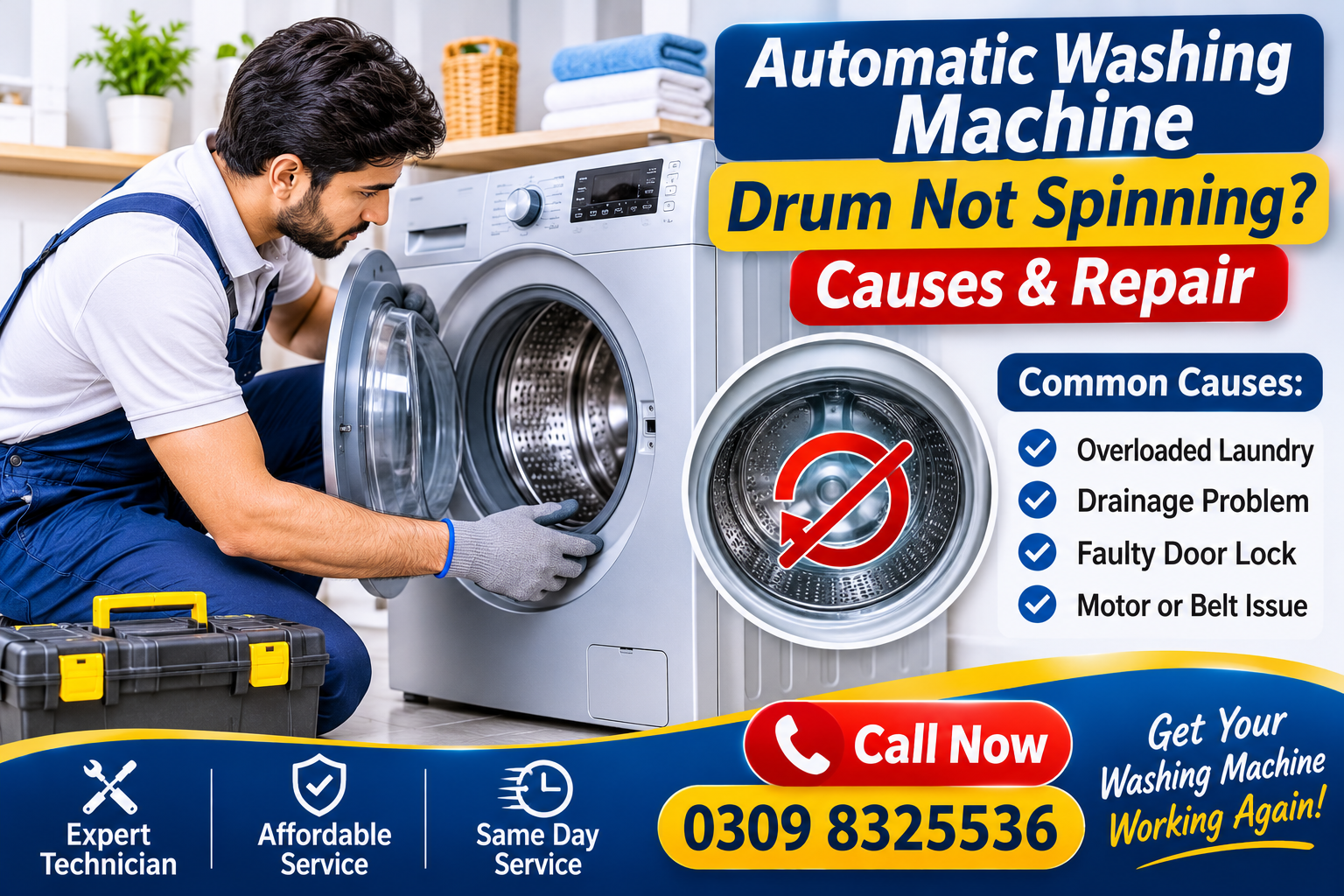
An automatic washing machine makes laundry easier by handling washing, rinsing, and spinning cycles automatically. However, one frustrating problem homeowners experience is when the washing machine drum stops spinning properly.
You may notice that the machine fills with water and washes clothes normally but fails to spin at the end of the cycle. Sometimes, clothes remain soaking wet, the machine makes unusual noises, or the drum does not move at all.
If you are experiencing an automatic washing machine not spinning problem, there can be several possible reasons, including an unbalanced laundry load, faulty door lock, damaged motor, worn drive belt, or drainage issue.
In this guide, we will explain the common causes of washing machine drum problems, simple troubleshooting steps, repair options, and when to contact a professional washing machine technician.
The spinning cycle removes excess water from clothes by rotating the drum at high speed.
If the drum does not spin, the machine may stop before completing the washing program.
Several mechanical and electrical components work together to operate the spinning system. A problem with any of these components can prevent the drum from rotating.
Let’s explore the most common reasons.
Overloading is one of the most common reasons an automatic washing machine fails to spin.
When too many clothes are placed inside the drum, the weight becomes difficult to distribute evenly.
Modern washing machines may automatically stop or reduce spinning speed when they detect an unbalanced load.
Common signs:
Solution:
Remove some clothes and distribute the remaining laundry evenly inside the drum.
Avoid washing heavy blankets, towels, and large clothing items together if they exceed the machine’s recommended capacity.
An automatic washing machine usually needs to drain water before starting the high-speed spin cycle.
If water remains inside the drum, the machine may prevent spinning to protect its components.
Possible causes:
Solution:
Check the accessible drain filter and hose according to the manufacturer’s instructions.
Disconnect the machine from electricity before inspecting these components.
If the washing machine still cannot drain water, the drain pump may require professional inspection.
Automatic washing machines have safety mechanisms that prevent spinning when the door or lid is not properly secured.
If the door lock or lid switch becomes faulty, the machine may refuse to start the spin cycle.
Common signs:
Solution:
Check that the door is properly closed and that no clothing is trapped between the door and its seal.
If the door lock mechanism is damaged, it may need replacement by a qualified technician.
Never bypass the door safety switch.
Some automatic washing machines use a drive belt to transfer power from the motor to the drum.
Over time, the belt can become loose, stretched, worn, or broken.
When this happens, the motor may operate without properly rotating the drum.
Common signs:
Solution:
A technician can inspect the drive belt and replace it if necessary.
Not all automatic washing machines use a traditional drive belt. Some models use direct-drive motors.
The motor is responsible for rotating the drum during washing and spinning.
If the motor develops a fault, the drum may stop moving or operate intermittently.
Possible causes:
Solution:
A professional technician can test the motor and related electrical components.
Depending on the condition, the motor may need repair or replacement.
Modern automatic washing machines use electronic control boards to manage washing programs, motor speed, water levels, and spinning operations.
If the control board develops a fault, the machine may fail to send the correct signals to the motor.
Common signs:
Solution:
The control board should be inspected by an experienced washing machine technician.
Depending on the damage, the board may require component-level repair or replacement.
Drum bearings allow the washing machine drum to rotate smoothly.
When these bearings become worn or damaged, the drum may produce loud noises and struggle to spin.
Warning signs:
Solution:
Damaged bearings generally require professional repair.
The technician may need to disassemble parts of the washing machine to inspect and replace the bearings.
Some automatic washing machines use a motor capacitor to help the motor start or operate.
If the capacitor becomes weak or damaged, the motor may struggle to rotate the drum.
Common signs:
Solution:
A qualified technician can test the capacitor and replace it if necessary.
Capacitors can retain electrical charge, so never attempt to inspect or replace one without proper training.
Before arranging professional repair, you can perform a few basic checks.
Open the machine only when it is safe to do so.
Remove excess clothes and distribute the remaining laundry evenly.
Try running a suitable spin program.
Look for visible kinks in the drain hose.
If your machine has an accessible drain filter, clean it according to the manufacturer’s instructions.
Prepare towels and a container because water may spill out.
Make sure the washing machine door or lid closes properly.
Remove any clothing trapped around the door seal.
If the door lock indicator continues flashing, the locking mechanism may need inspection.
Some washing programs use low spin speeds or no spin at all.
Check whether the machine is set to a suitable spin speed.
Select the correct spin program according to the type of laundry.
If there is no visible problem, switch off the machine and disconnect it from power.
Wait briefly, reconnect it, and select the appropriate program.
If the problem continues, avoid repeatedly restarting the appliance.
Both front-load and top-load automatic washing machines can develop spinning problems, but their designs are different.
Front-load washing machines use a horizontal drum that rotates during washing and spinning.
Common problems include:
These machines may also stop spinning when they detect an unbalanced load.
Top-load washing machines generally use a vertical drum or basket.
Common problems include:
The exact repair depends on the washing machine’s design and model.
Washing machine repair costs in Karachi depend on the brand, model, damaged component, availability of spare parts, and technician charges.
For example, cleaning a blocked drain filter is usually a simpler job than replacing drum bearings or repairing an electronic control board.
The repair estimate may depend on:
It is better to arrange a proper inspection before approving expensive repairs.
A professional diagnosis can help identify the actual problem and avoid unnecessary component replacement.
Some washing machine problems cannot be fixed through basic troubleshooting.
Contact a qualified technician if:
A technician can inspect the motor, drainage system, bearings, drive mechanism, and electronic controls.
Timely repair can help prevent further damage and extend the life of your appliance.
Regular maintenance can reduce the chances of drum and spinning problems.
Follow the recommended laundry capacity for your washing machine.
Remove lint, coins, and other debris from the accessible filter according to the manufacturer’s maintenance schedule.
Use detergent designed for your washing machine type.
Excessive detergent can create residue and affect machine performance.
Wash heavy items according to the manufacturer’s recommendations.
Avoid placing all heavy clothes on one side of the drum.
An uneven installation can cause excessive vibration during spinning.
Adjust the leveling feet if necessary.
Professional inspection can help identify worn components and drainage problems before they become serious.
An automatic washing machine drum that is not spinning can be frustrating, especially when clothes remain wet after washing.
The problem may be caused by an overloaded drum, blocked drainage system, faulty door lock, damaged drive belt, motor failure, or worn bearings.
Start with simple checks such as reducing the laundry load, inspecting the drain hose, and checking the washing program.
If the drum still does not spin or the machine produces unusual noises, professional diagnosis is recommended.
Regular cleaning, correct loading, and timely maintenance can help your automatic washing machine operate smoothly and provide reliable performance for years.
This can happen because of an unbalanced laundry load, blocked drain filter, faulty door lock, damaged drive belt, or motor problem. Check the load and drainage system first. If the problem continues, arrange professional inspection.
Yes. Excessive laundry can create an unbalanced load. Modern washing machines may reduce spin speed or stop spinning to protect the appliance. Removing some clothes and redistributing the load may solve the problem.
Possible causes include a faulty motor, damaged drive belt, blocked drain pump, worn bearings, or a motor capacitor problem in applicable models. A technician should inspect the machine to identify the exact cause.
The cost depends on the washing machine brand, model, and damaged component. Simple drainage repairs generally cost less than motor, bearing, or control board replacements. Request a technician’s inspection and estimate before approving the repair.
Electrolux is a recognized home appliance brand known for products designed to make everyday household tasks easier. Its refrigerators, washing machines, air conditioners, microwave...

Toshiba is a well-known electronics and home appliance brand offering products designed for everyday convenience. Toshiba appliances, including refrigerators, washing machines, air conditioners, microwave...

Dawlance is one of the most popular home appliance brands in Pakistan, known for its refrigerators, washing machines, air conditioners, microwave ovens, and other...