
November 20, 2026

Electrolux is a recognized home appliance brand known for products designed to make everyday household tasks easier. Its refrigerators, washing machines, air conditioners, microwave...


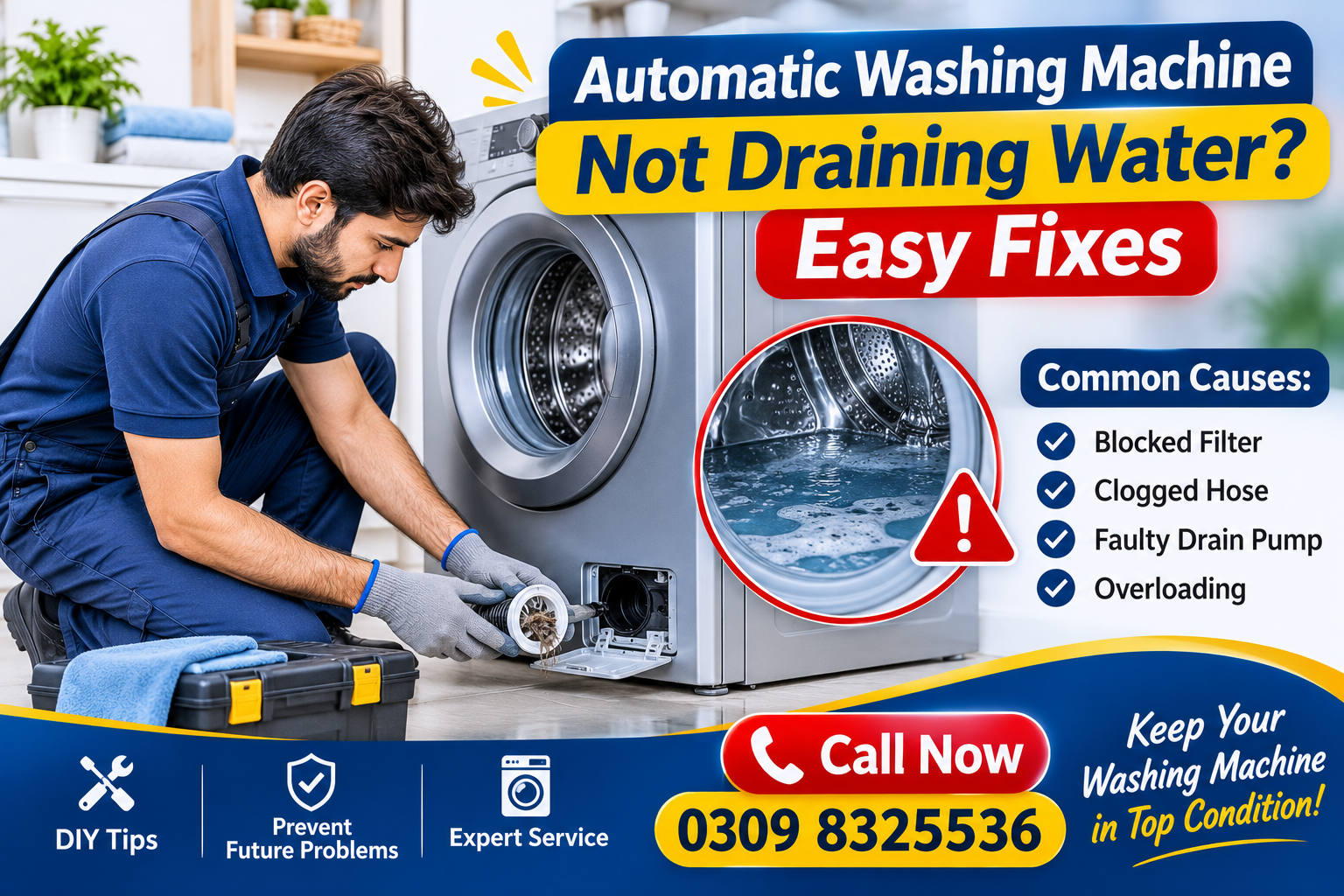
An automatic washing machine makes laundry easier by washing, rinsing, and spinning clothes without requiring constant attention. However, one common problem homeowners experience is when the washing machine stops draining water properly.
If your washing machine finishes the wash cycle but leaves water inside the drum, your clothes may remain soaking wet. Sometimes, the machine may stop before the spin cycle, display an error code, or make unusual noises while trying to drain water.
The good news is that many drainage problems have simple causes, such as a clogged drain hose, blocked filter, or incorrect drain installation.
In this guide, we will explain why an automatic washing machine is not draining water, how to identify common problems, and which troubleshooting steps you can safely perform at home.
An automatic washing machine uses a drainage system to remove dirty water after washing and rinsing.
When this system becomes blocked or a component stops working, water may remain inside the drum.
Understanding the possible causes can help you identify the problem before arranging professional repair.
A drain hose carries dirty water from the washing machine to the household drainage system.
Over time, the hose can become blocked with lint, detergent residue, small clothing items, or other debris.
A blocked hose prevents water from flowing out properly.
Common signs:
Check the accessible drain hose for visible kinks or bends.
If the hose is damaged or blocked internally, it may need cleaning or replacement.
Many automatic washing machines have a drain filter that collects lint, coins, buttons, and other small objects.
When the filter becomes clogged, water cannot flow through the drainage system properly.
This is one of the common reasons a washing machine stops draining.
Common signs:
Some washing machines have an accessible filter near the bottom front panel.
Always check your manufacturer’s instructions before opening the filter.
The drain pump pushes water out of the washing machine.
If the pump becomes damaged or blocked, the machine may fail to remove water from the drum.
A faulty pump can also affect the spin cycle because many washing machines need to drain water before spinning.
Possible causes:
If the pump makes a humming sound but water does not drain, it may be blocked or damaged.
A qualified technician can inspect the pump and determine whether cleaning or replacement is necessary.
Incorrect drain hose installation can also cause drainage problems.
If the hose is positioned too high, too low, or incorrectly connected, the washing machine may not drain properly.
Some installations can also allow water to flow back into the machine.
Check the manufacturer’s recommended drain hose height and installation instructions.
Avoid making changes without confirming the correct installation requirements for your model.
Putting too many clothes inside the washing machine can affect its operation.
An overloaded drum may prevent clothes from moving properly during washing and spinning.
Some machines may stop the spin cycle when the load is unbalanced.
This can leave clothes wet and create the impression that the washing machine is not draining.
Remove some clothes and try a smaller load.
A blocked pump filter can prevent water from reaching the drain pump.
Small objects such as coins, hairpins, buttons, and lint may collect inside the filter.
If your washing machine has an accessible drain filter, inspect it according to the manufacturer’s instructions.
Never force the filter open.
Before calling a washing machine technician, you can perform a few basic troubleshooting steps.
Always disconnect the machine from electricity before inspecting accessible components.
Switch off the washing machine and disconnect it from the electrical supply.
If water remains inside the drum, avoid opening the door until you understand how your machine handles water-filled door locks.
Some front-load washing machines automatically lock the door when water is present.
Inspect the visible drain hose.
Look for:
Make sure the hose is installed according to the manufacturer’s instructions.
If the hose is damaged, arrange replacement rather than attempting an unsafe repair.
If your washing machine has an accessible drain filter, check the manufacturer’s cleaning instructions.
Before opening it, prepare towels and a shallow container because water may come out.
Remove accessible debris and clean the filter gently.
Do not use excessive force or sharp tools.
After cleaning, reinstall the filter correctly.
Sometimes the washing machine is working correctly, but the household drain is blocked.
Check whether water drains properly from nearby sinks or other connected drainage points.
If several drains are slow, the problem may be in the household plumbing.
Contact a plumber if necessary.
If the washing machine is overloaded, remove some clothes.
Distribute the remaining laundry evenly inside the drum.
Try running the appropriate drain or spin program according to your machine’s instructions.
After checking the accessible components, reconnect the machine and select the appropriate drain or spin program.
Observe whether water flows out normally.
If the machine still cannot drain, stop the cycle and arrange professional inspection.
Sometimes the washing machine drains during washing but stops after the rinse cycle.
This may happen when the machine encounters a drainage problem before spinning.
If the machine repeatedly stops at the same stage, check for an error code.
The error code can help identify whether the problem involves drainage, water supply, or another component.
Consult your washing machine manual for the correct meaning.
A washing machine may produce unusual sounds when it cannot drain water.
The type of noise can provide useful clues.
A humming sound may indicate that the drain pump is receiving power but cannot move water properly.
A blockage or pump problem may be responsible.
A grinding sound may indicate debris inside the pump or damaged mechanical components.
Stop the machine if the noise is severe.
Clicking may come from the machine’s controls, door lock, or electrical components.
If clicking continues and the machine cannot drain, professional inspection may be necessary.
Do not open electrical components yourself.
Both front-load and top-load automatic washing machines can develop drainage problems.
However, their designs and accessible maintenance components may differ.
Front-load washing machines commonly have a drain pump filter located near the lower front panel.
Possible drainage problems include:
Follow the manufacturer’s instructions before accessing the filter.
Top-load washing machines may have different pump and filter arrangements.
Common drainage problems include:
Some top-load models use different drainage mechanisms, so troubleshooting instructions should match the specific model.
Some problems require professional diagnosis rather than home troubleshooting.
Contact a qualified technician if:
A professional can inspect the pump, wiring, drainage components, and control system.
Early diagnosis may help prevent further damage.
Regular maintenance can help your automatic washing machine drain properly.
Check the manufacturer’s recommended filter cleaning schedule.
Remove lint and debris before they accumulate excessively.
Coins, tissues, buttons, and small objects can enter the drainage system.
Always check pockets before washing clothes.
Follow the recommended load capacity.
Overloading can affect washing performance and spinning.
Use detergent suitable for your washing machine.
Excessive detergent can create residue that may contribute to buildup.
Check the visible hose for kinks and damage.
Make sure it is installed correctly.
Clean the drum and accessible detergent compartments according to the manufacturer’s instructions.
Regular cleaning helps reduce detergent residue and unpleasant odors.
An automatic washing machine that is not draining water can be frustrating, especially when clothes remain wet after a completed wash cycle.
However, many drainage problems are caused by common issues such as a clogged drain filter, blocked hose, overloaded drum, or faulty drain pump.
Start by checking the accessible drain hose, cleaning the filter according to the manufacturer’s instructions, and reducing the laundry load.
If the washing machine continues to hold water, makes unusual noises, or displays repeated drainage errors, professional inspection is recommended.
Regular maintenance and correct washing habits can help your automatic washing machine operate efficiently and reduce the chances of future drainage problems.
The most common causes include a clogged drain filter, blocked drain hose, faulty drain pump, incorrect hose installation, or an overloaded drum. Check accessible components according to the manufacturer’s instructions.
It is better to stop using the washing machine until the drainage problem is identified. Running repeated cycles may cause additional problems if the pump is blocked or damaged.
Turn off and unplug the machine. Follow the manufacturer’s instructions for emergency draining, which may involve an emergency drain hose or accessible pump filter. Prepare towels and a shallow container because water can spill out.
Repair costs depend on the washing machine brand, model, pump condition, spare parts, and labor charges. A technician should inspect the machine before providing an accurate repair estimate.
Electrolux is a recognized home appliance brand known for products designed to make everyday household tasks easier. Its refrigerators, washing machines, air conditioners, microwave...

Toshiba is a well-known electronics and home appliance brand offering products designed for everyday convenience. Toshiba appliances, including refrigerators, washing machines, air conditioners, microwave...

Dawlance is one of the most popular home appliance brands in Pakistan, known for its refrigerators, washing machines, air conditioners, microwave ovens, and other...