
November 20, 2026

Electrolux is a recognized home appliance brand known for products designed to make everyday household tasks easier. Its refrigerators, washing machines, air conditioners, microwave...


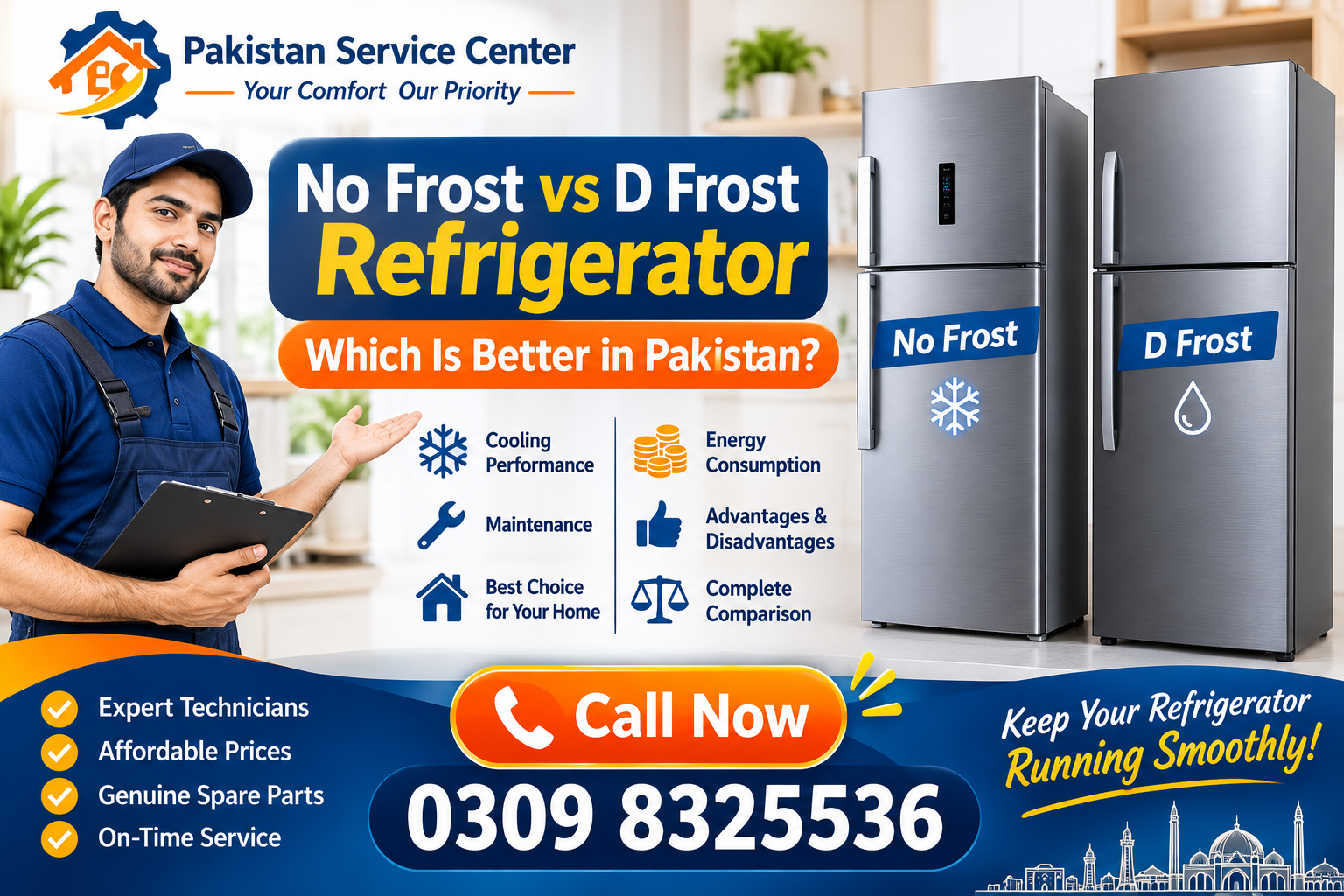
Choosing the right refrigerator is an important decision for every household in Pakistan. A refrigerator is used daily to keep food fresh, store vegetables, preserve meat, and maintain drinks at the right temperature. However, when buying a new refrigerator, many people get confused between No Frost and D Frost technology.
Both types have different cooling systems, maintenance requirements, advantages, and disadvantages. No Frost refrigerators offer automatic defrosting, while D Frost refrigerators generally require manual defrosting.
But which one is better for Pakistani homes? Which consumes less electricity? And which refrigerator offers better long-term value?
In this guide, we will explain everything about No Frost vs D Frost refrigerators to help you make the right purchasing decision.
A No Frost refrigerator is designed to prevent excessive ice buildup inside the freezer. It uses an evaporator and cooling fans to circulate cold air throughout the refrigerator compartments.
Unlike traditional refrigerators, No Frost models automatically remove frost from the evaporator through a built-in defrost system.
This makes everyday refrigerator maintenance easier because you generally do not need to manually remove ice from the freezer.
No Frost refrigerators use several components to maintain proper cooling:
These components work together to maintain cooling and prevent excessive frost accumulation.
1. Automatic Defrosting
The biggest advantage is automatic defrosting. You do not need to switch off the refrigerator regularly to remove accumulated freezer ice.
2. Better Air Circulation
Cooling fans distribute cold air throughout the compartments, helping maintain more consistent temperatures.
3. Less Ice Buildup
No Frost technology prevents excessive frost from covering freezer surfaces and reducing storage space.
4. Convenient Food Storage
It is easier to organize frozen meat, vegetables, ice cream, and other food products without dealing with thick layers of ice.
5. Modern Features
Many No Frost refrigerators include inverter compressors, digital temperature controls, multiple cooling zones, and advanced storage options.
Although No Frost refrigerators offer convenience, they also have some disadvantages.
Proper maintenance and food storage can help reduce these issues.
D Frost, commonly known as Direct Frost or Direct Cool, is a refrigerator cooling technology that generally uses natural air circulation instead of a dedicated fan-based cooling system.
In these refrigerators, frost can gradually accumulate inside the freezer compartment.
Unlike No Frost refrigerators, most D Frost models require manual defrosting when excessive ice develops.
These refrigerators are often chosen by people looking for affordable and straightforward cooling solutions.
D Frost refrigerators use a cooling system that transfers cold temperatures through cooling surfaces.
Cold air circulates naturally inside the compartments without the same forced-air arrangement used in No Frost models.
As moisture freezes, ice gradually forms around the freezer cooling surfaces.
When the ice becomes excessive, the refrigerator needs to be switched off and manually defrosted according to the manufacturer’s instructions.
1. Affordable Purchase Price
D Frost refrigerators are often more affordable than comparable No Frost models.
They can be suitable for households that want basic refrigeration without spending extra money on advanced features.
2. Simple Cooling System
Their cooling arrangement is generally simpler, which can make some maintenance tasks straightforward.
3. Fewer Fan-Related Components
Many D Frost models do not use dedicated evaporator circulation fans, reducing the number of fan-related components.
4. Suitable for Small Families
A D Frost refrigerator can be a practical option for small households with basic food storage requirements.
5. Straightforward Operation
Most models offer simple temperature controls and basic refrigerator functions.
D Frost refrigerators also have some limitations:
Regular defrosting and correct food placement help maintain proper performance.
Understanding the differences between these two technologies makes it easier to select the right refrigerator.
| Features | No Frost | D Frost |
|---|---|---|
| Defrosting | Automatic | Manual |
| Ice buildup | Generally minimized | More common |
| Cooling system | Fan-assisted | Natural circulation |
| Maintenance | Less manual defrosting | Regular defrosting |
| Purchase price | Usually higher | Usually lower |
| Air circulation | More uniform | Less uniform |
| Fan components | Usually included | Generally not included |
| Convenience | High | Basic |
| Best for | Busy families | Budget-conscious buyers |
Actual performance and electricity consumption depend on the specific refrigerator model.
Pakistan has different weather conditions throughout the year. During summer, refrigerators in cities like Karachi, Lahore, and Islamabad may need to work harder to maintain the required temperature.
Therefore, choosing the right refrigerator is important for both convenience and long-term performance.
No Frost refrigerators are generally a better option for large families that store large quantities of frozen food.
If you frequently store meat, chicken, vegetables, and frozen products, automatic defrosting can make everyday use more convenient.
It also helps prevent thick ice buildup inside the freezer.
D Frost refrigerators can be suitable for small families, students, and people living in rental properties.
If your food storage requirements are limited and you do not mind manually defrosting the freezer, this technology can offer good value.
Karachi experiences hot and humid summers, which can increase refrigerator cooling demand.
Both No Frost and D Frost refrigerators can work effectively when properly installed and maintained.
For better performance:
A refrigerator’s cooling performance depends on its compressor, insulation, refrigerant system, and overall design, not just its defrost technology.
Electricity consumption is one of the biggest concerns for Pakistani households.
Many people believe that D Frost refrigerators always consume less electricity because they have simpler cooling systems.
However, the actual electricity consumption depends on several factors.
1. Compressor Type
An inverter compressor adjusts its operating speed according to cooling requirements.
This can help reduce electricity consumption compared with some conventional compressor systems.
2. Refrigerator Capacity
Larger refrigerators generally require more energy than smaller models, depending on their efficiency and usage.
3. Door Opening Frequency
Opening the refrigerator frequently allows warm air to enter, increasing the cooling workload.
4. Temperature Settings
Extremely low temperature settings can increase electricity consumption unnecessarily.
5. Door Seal Condition
Damaged door rubber allows cold air to escape, causing the compressor to work harder.
Buying Tip: Always compare the energy consumption label and annual electricity usage of different refrigerator models before purchasing.
Although No Frost refrigerators are convenient, they can develop technical problems over time.
Some common issues include:
A faulty fan can prevent cold air from circulating properly inside the refrigerator.
A damaged defrost heater, sensor, or control component may cause excessive ice buildup around the evaporator.
A blocked drain can cause water leakage inside the refrigerator.
A faulty sensor may cause incorrect temperature readings and inconsistent cooling.
A damaged compressor can affect the entire cooling system and prevent the refrigerator from maintaining the correct temperature.
If your refrigerator is not cooling properly, professional inspection can help identify the actual problem.
D Frost refrigerators also require regular maintenance to maintain proper cooling.
Common problems include:
If ice becomes too thick, manual defrosting may be necessary.
Always avoid using sharp objects to remove ice because they can damage cooling components and potentially cause refrigerant leakage.
Whether you own a No Frost or D Frost refrigerator, proper maintenance can improve its performance and help prevent unnecessary repair costs.
Clean the interior shelves, door compartments, and accessible exterior areas regularly.
Make sure the door gasket is clean and seals properly.
For most refrigerators, approximately 3°C to 4°C is suitable for the fresh-food compartment, while -18°C is commonly recommended for the freezer.
Follow the manufacturer’s instructions.
Keep sufficient space for proper air circulation inside the refrigerator.
Remove excessive ice buildup when required.
Always follow the manufacturer’s defrosting instructions.
If your refrigerator develops unusual noise, water leakage, excessive frost, or cooling problems, contact an experienced refrigerator technician.
Early diagnosis can help prevent more serious damage.
Before purchasing a refrigerator, consider these important points:
Do not select a refrigerator based only on its cooling technology. Overall quality, energy efficiency, warranty, and service availability are equally important.
When comparing No Frost vs D Frost refrigerators, both technologies have advantages for different types of households in Pakistan.
No Frost refrigerators are ideal for people who want automatic defrosting, convenient freezer storage, and less manual maintenance.
D Frost refrigerators are suitable for people who prefer affordable appliances with simple cooling technology and do not mind occasional manual defrosting.
For larger families and frequent freezer users, a good-quality No Frost refrigerator is generally a convenient choice.
However, for smaller households and budget-conscious buyers, a D Frost refrigerator can provide reliable everyday cooling.
Before making your final decision, compare refrigerator capacity, electricity consumption, compressor technology, warranty, and maintenance requirements.
Choosing the right refrigerator will help keep your food fresh and provide dependable performance for years.
No Frost refrigerators are generally better for convenience because they automatically manage frost buildup. D Frost refrigerators are often more affordable and suitable for people who do not mind manual defrosting.
Not necessarily. No Frost refrigerators use fans and automatic defrost components, but actual electricity consumption depends on compressor efficiency, insulation, capacity, and usage.
Yes. D Frost refrigerators can work well in Pakistan when properly installed and maintained. Regular defrosting and correct temperature settings help maintain cooling performance.
Generally, no. Both technologies use different cooling arrangements and components. Converting a D Frost refrigerator into a No Frost model is usually impractical, so purchasing a factory-designed No Frost refrigerator is a better option.
Electrolux is a recognized home appliance brand known for products designed to make everyday household tasks easier. Its refrigerators, washing machines, air conditioners, microwave...
Toshiba is a well-known electronics and home appliance brand offering products designed for everyday convenience. Toshiba appliances, including refrigerators, washing machines, air conditioners, microwave...

Dawlance is one of the most popular home appliance brands in Pakistan, known for its refrigerators, washing machines, air conditioners, microwave ovens, and other...